
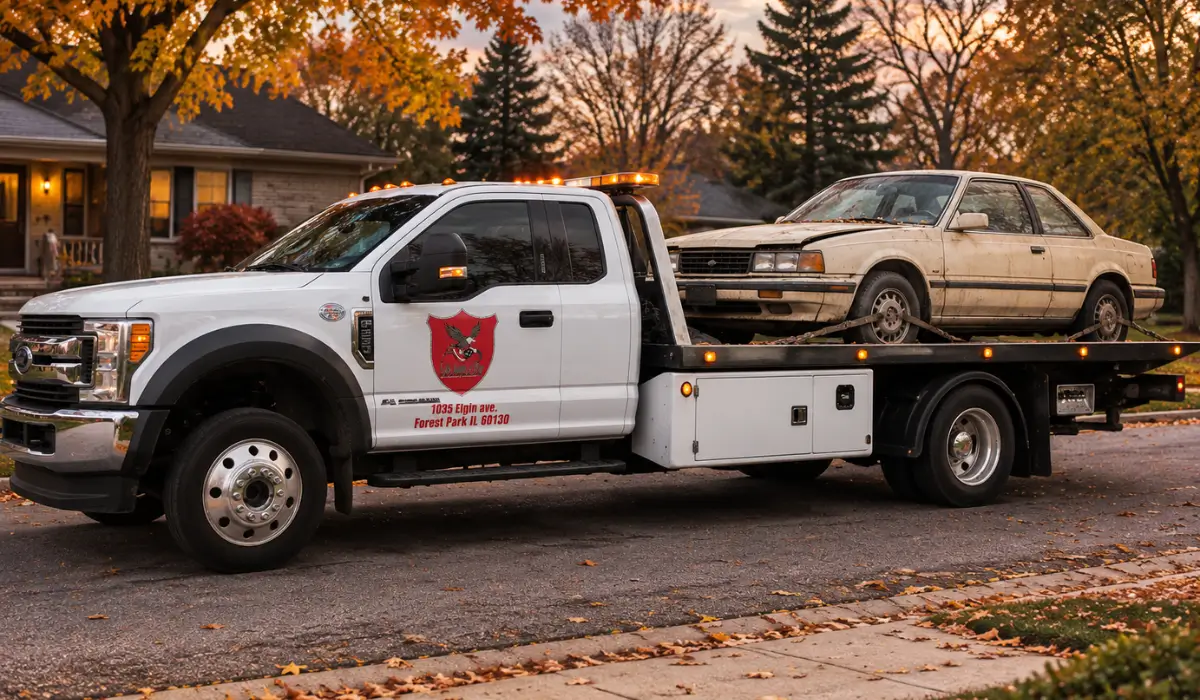
How to Sell a Car With a Salvage Title
A salvage title does not automatically mean your car has no value. You may still be able to sell the vehicle, depending on its title status, applicable Illinois requirements, and the buyer.
You may not need to repair it first. A+ Junk n Tow buys wrecked, totaled, old, used, running, and non-running vehicles. For owners who would rather sell than repair, our cash for junk cars service provides another option.
Before selling, confirm what your title says, gather the available paperwork, and describe the vehicle accurately. Knowing what a buyer needs can make the sale easier to understand.
Understanding What a Salvage Title Means
A salvage title generally identifies a vehicle with significant damage or a total-loss history. That history matters, but usable parts, materials, and other components may still give the vehicle salvage value.
Salvage and rebuilt are not necessarily the same. Repairs, inspections, paperwork, or other requirements may apply before a vehicle’s title status changes. The Illinois Vehicle Code addresses salvage and rebuilt vehicles in Illinois.
You may also hear the term branded title car. A branded title is a broader description for a title carrying information about a vehicle’s history, while salvage is a specific title status.
The important point is simple: do not assume the vehicle is worthless, and do not describe it as rebuilt unless its paperwork shows that status.
Step 1: Gather the Right Information
Having the right information ready helps a buyer identify the vehicle, understand its history, and evaluate its condition.
Prepare:
- Title or ownership paperwork: Confirm the document and title status you have.
- VIN: Make sure the vehicle identification number matches your paperwork.
- Repair records: Keep records of completed repairs when available.
- Insurance records: Gather any records that help document the vehicle’s history.
- Photos: Show the exterior, interior, and visible damage.
Repair and insurance records can provide useful context, but they do not replace proof of ownership.
For example, keeping the title information, VIN, available repair records, current photos, and sale records together makes them easier to find when questions come up. The paperwork needed for a particular sale can depend on the vehicle and its title status.
If ownership is unclear, do not guess. Ownership requirements also matter when a vehicle may need to be legally sold as an abandoned car, although that is different from selling a salvage-title vehicle.
Before completing a transfer, confirm the current Illinois title requirements that apply to your situation.
Step 2: Be Transparent About the Vehicle
Tell the buyer what you know about accident history, flood exposure, mechanical problems, and visible damage. Accurate information helps the buyer understand what is being evaluated and reduces surprises later.
You do not need to diagnose a problem yourself. Saying “the vehicle does not start” is more accurate than saying “the engine is blown” when the cause has not been confirmed. Describe visible damage the same way.
A vehicle that cannot be driven may still be sellable. Depending on its condition, selling a non-running car may make more sense than repairing it only to prepare it for sale.
Step 3: Know What Influences the Offer
The salvage title is only one factor affecting salvage value. We also consider the vehicle’s current condition and what remains usable.
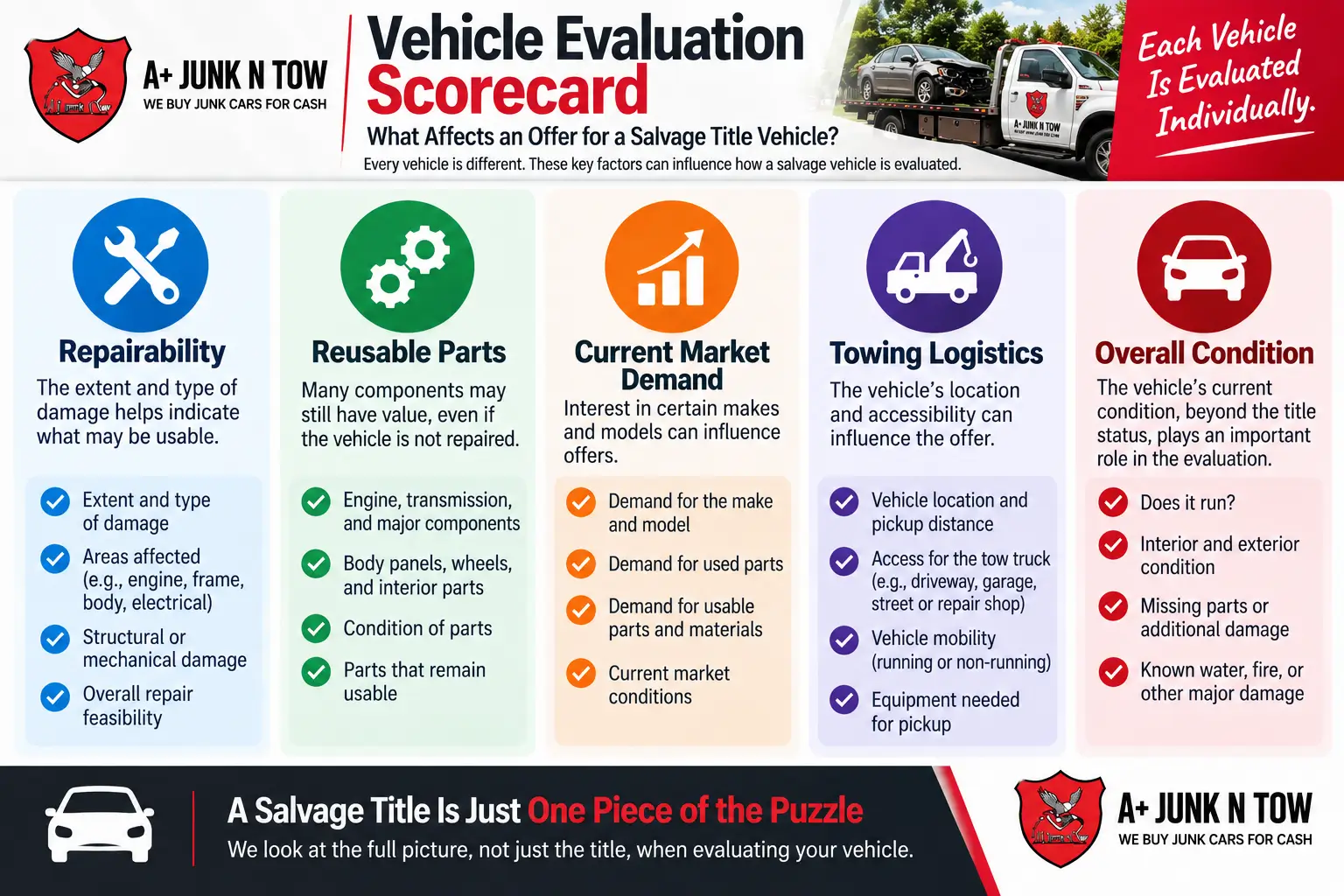
The vehicle’s location and accessibility can affect pickup requirements. Its condition can also reveal what remains usable beyond what the title says about its history.
Market conditions change as well. Metal values and other economic factors can contribute to changes in junk car prices.
A salvage title is one part of the evaluation. The vehicle’s current condition helps complete the picture.
Step 4: Compare Buyers the Smart Way
Price matters, but it is not the only part of the deal. A search for junk car buyers near me may give you several choices, so compare what each buyer actually includes.
Ask:
- Communication: Are the process and next steps clear?
- Transparency: Are the offer terms and possible conditions clear?
- Towing: Is pickup available, and what conditions apply?
- Payment: When and how will you be paid?
- Paperwork: What documents will you need?
A larger quote may not be the better deal if costs, conditions, payment details, or pickup requirements remain unclear. See the vehicles A+ Junk n Tow buys and how our service works.
What to Expect When Selling Your Vehicle
- Send the vehicle details. Provide the make, model, location, and other basic information.
- Describe its condition. Tell us whether it runs and list any damage or problems you know of.
- Check your ownership paperwork. Have the title or other ownership documents ready.
- Review the offer. Check the amount and any conditions.
- Plan the pickup. Confirm the vehicle’s location, accessibility, and pickup details.
- Finish the sale. Complete the required paperwork, payment, and pickup steps.
Common Mistakes Sellers Mak
Even when the vehicle can be sold, a few mistakes can make the process harder than it needs to be:
- ❌ Assuming a salvage title means “worthless.” A salvage title does not automatically eliminate value. The vehicle’s condition, usable components, materials, and current market factors can still matter.
- ❌ Accepting the first offer without comparison. Look beyond the quoted amount. Towing terms, payment timing, paperwork requirements, and other conditions can affect the final amount and how the sale works.
- ❌ Forgetting personal belongings. Before pickup, check the trunk, glove box, console, under the seats, and other storage areas.
- ❌ Misunderstanding title paperwork. Confirm the title and ownership documents you have rather than guessing which documents you need for the sale.
Illinois Driver Perspective
Illinois vehicles can experience collision, hail, flooding, and other types of damage. Hail may leave widespread body damage, while flood exposure can affect electrical, mechanical, and safety-related components.
Damage alone does not establish that a vehicle has a salvage title. Title status depends on the vehicle’s documented history and applicable Illinois requirements.
For vehicles exposed to flooding, federal safety information identifies potential warning signs and concerns that may not be obvious from appearance alone. NHTSA’s vehicle safety resources cover broader safety topics separately from vehicle title status.
Willowbrook Perspective
For a salvage-title vehicle in Willowbrook, practical pickup details matter. Tell us where the vehicle is, whether it rolls, and whether a tow truck can reach it. A vehicle in an open driveway can require different arrangements from one inside a garage, behind another vehicle, or at a repair shop.
Willowbrook is among our Illinois service areas. Clear information about the location and vehicle condition helps us determine the pickup arrangements that apply.
A professional buyer can handle the vehicle review, ownership paperwork, offer, and pickup as part of the same sale.
Pro Tip From the A+ Junk n Tow Team
“Photograph the vehicle before pickup and keep copies of your paperwork. Keeping everything organized can make the sale easier for everyone.”
Photos give you a record of the vehicle’s visible condition at pickup. Keeping copies of the paperwork also gives you a record of the sale.
Key Takeaways
- ✓ A salvage title doesn’t automatically eliminate value.
- ✓ Complete documentation improves the selling experience.
- ✓ Comparing buyers helps you evaluate more than just price.
- ✓ Transparency builds trust and avoids surprises.
Frequently Asked Questions
Can I sell a salvage-title vehicle without repairing it?
You may be able to sell it as-is. A+ Junk n Tow buys wrecked, totaled, running, and non-running vehicles. Ownership and applicable title requirements still matter.
Will a salvage title affect my offer?
It can. We consider the salvage title along with condition, usable parts, market conditions, vehicle details, and towing needs.
Do buyers accept flood-damaged salvage vehicles?
Some buyers do. We buy vehicles in different conditions, so tell us about known water exposure and the vehicle’s current condition.
What documents should I keep after the sale?
Keep the ownership and transaction records that apply to the sale. Our vehicle selling FAQs address other common questions about our process.
Should You Repair the Vehicle or Sell It As-Is?
Repair may make sense if the cost is manageable, you want to keep the vehicle, and fixing it is practical. Selling it as-is may make more sense if the vehicle does not run, has major damage, or would cost more to repair than you want to spend. Compare the repair cost with what you could get for the vehicle as it is.
If you decide to sell, send us the title status, make and model, location, whether the vehicle runs, and a clear description of its condition. We look at each vehicle individually. A salvage title is one factor that can affect the offer.
Send your vehicle details using our vehicle quote request form or call (708) 968-2505. We can review the vehicle information and pickup details so you can decide if selling the vehicle to us makes sense.