
01
Vehicle Condition
Accident damage, fire exposure, rust, and major mechanical problems affect what can be reused and recycled.
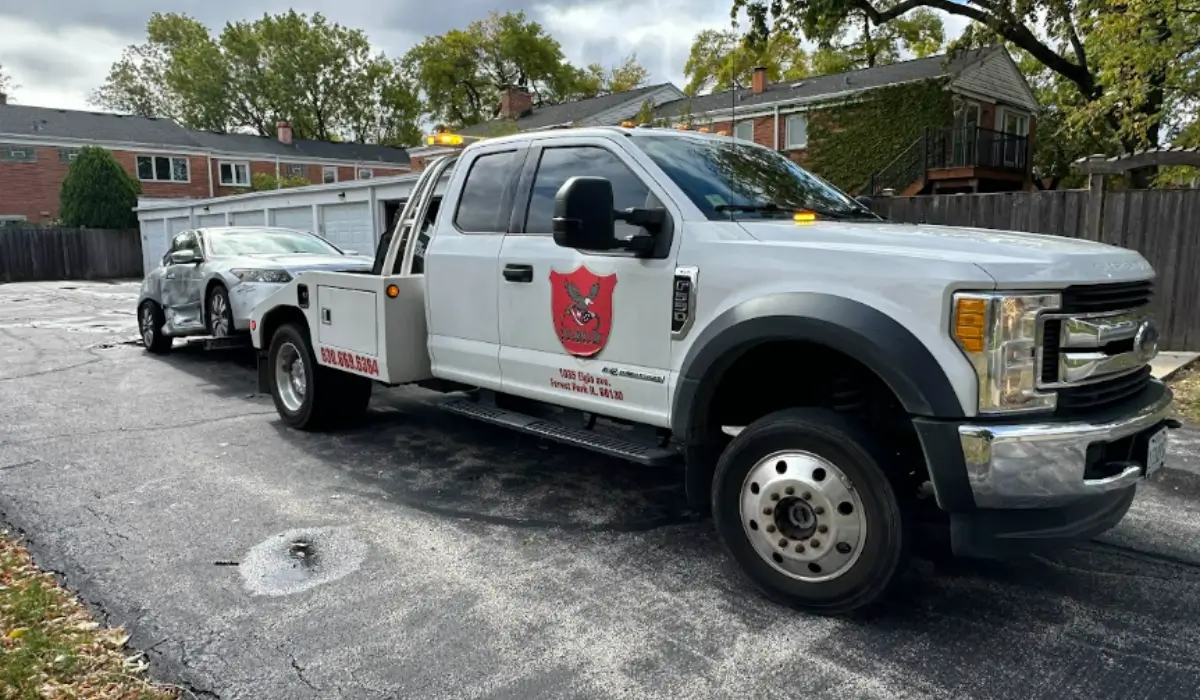
A vehicle can still have value even when it no longer runs. Junk car value depends on its condition, reusable parts, recyclable materials, local demand, and pickup needs rather than whether the engine starts. Understanding these factors can help you compare an offer with repair, storage, insurance, and ownership costs.
Many owners focus on one problem, such as a failed engine or transmission. That can hide other sources of value, including original wheels, an intact catalytic converter, recyclable metal, and parts that may still be useful.
A+ Junk N Tow explains the review process before preparing an offer. We want vehicle owners to understand what affects a quote, what information buyers need, and why two similar cars may receive different offers.
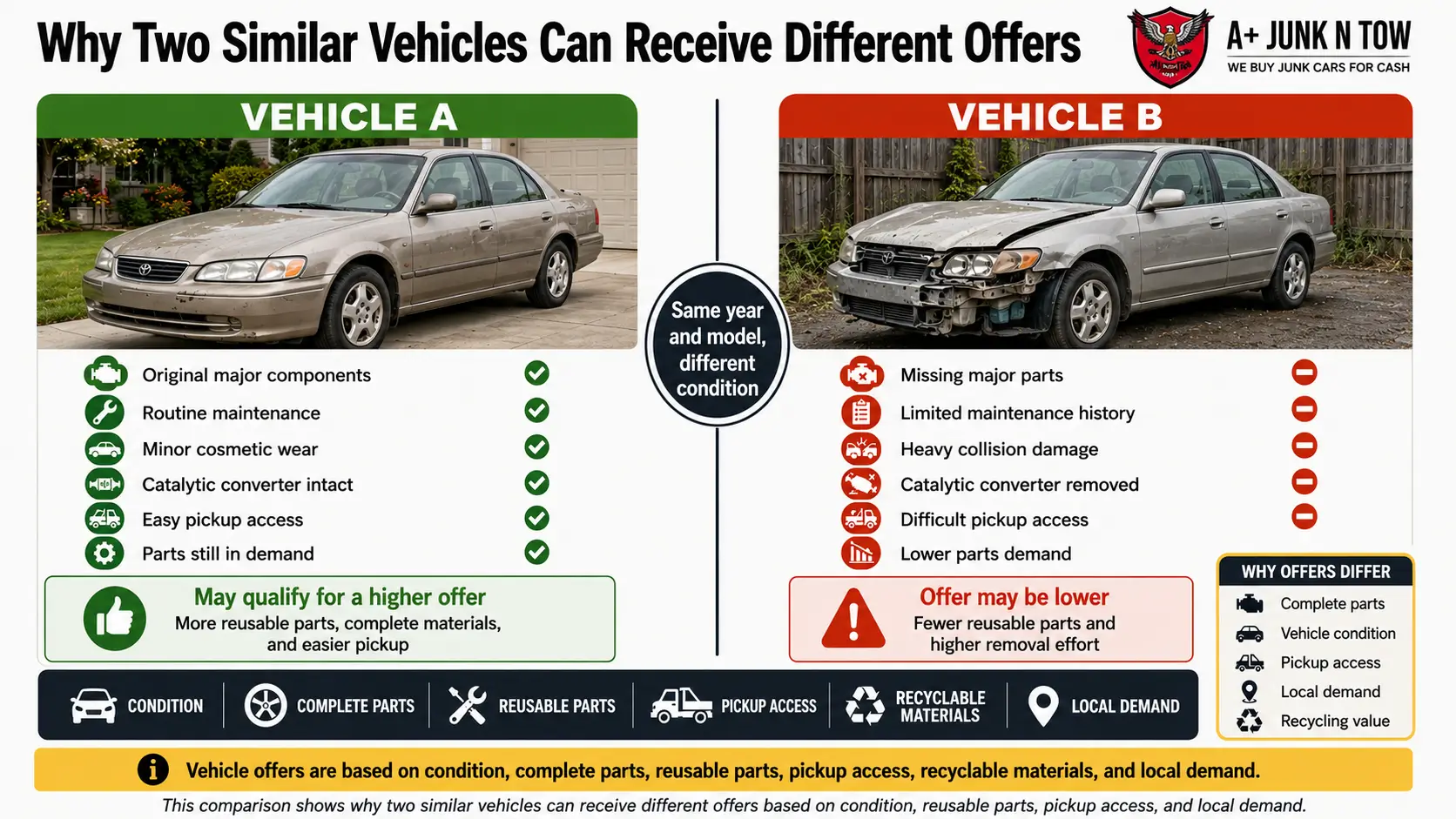
Two vehicles with the same year, make, and model can receive different offers because their condition and remaining parts are rarely identical. Mileage matters, but buyers also review damage, maintenance, missing components, pickup access, and demand for usable parts.
Picture two 2012 sedans parked side by side. The first has its original catalytic converter, four wheels, a complete engine, and minor body wear. The second has missing wheels, heavy collision damage, and several removed parts.
Their age is the same, but the amount of usable material left in each vehicle is not. That difference can have a direct effect on car scrap value.
| Vehicle A | Vehicle B |
|---|---|
| 🟢 Original major components | 🔴 Several missing parts |
| 🟢 Minor cosmetic wear | 🔴 Heavy collision damage |
| 🟢 Original catalytic converter | 🔴 Converter removed |
| 🟢 Easy driveway access | 🔴 Difficult pickup access |
| 🟢 Parts still in demand | 🔴 Limited local parts demand |
Vehicle A may look older, yet its complete parts and easier pickup can support a stronger offer. Vehicle B may require extra towing equipment or provide fewer reusable components.
The best comparison is not simply one model year against another. The more useful comparison looks at what remains in each car, what can still be used, and what is required to remove it safely.
Visible body damage is only one part of a vehicle review. Buyers also check whether the engine, transmission, wheels, battery, catalytic converter, and electronic parts remain in place.
What we often see is that owners underestimate cars with faded paint or dents while overestimating cleaner-looking cars that are missing major components. Cosmetic wear may affect some body parts, but missing equipment can reduce both parts value and recycling value.
Clear photos reduce that uncertainty. Useful photos show the front, rear, both sides, wheels, interior, VIN area, and any major damage.
Accurate details can also reduce the chance of an offer changing after the vehicle is inspected. A buyer can prepare a better quote when the photos and description match the car’s actual condition.
A fair vehicle offer is built from several connected factors, not one public scrap price. Condition, complete parts, material content, demand, pickup access, and current recycling activity can all affect the amount a buyer may offer.
Our team uses six simple points to explain the main parts of a vehicle review. This method does not create a fixed price because each car has a different condition, location, and mix of usable material.
The framework below shows why two quotes may differ even when the vehicles appear similar.
Accident damage, fire exposure, rust, and major mechanical problems affect what can be reused and recycled.
Original wheels, the catalytic converter, engine parts, and other major items may affect the offer.
Steel, aluminum, copper, and other materials contribute to car metal worth, but not the full offer.
Engines, transmissions, modules, and body parts may add value when demand remains strong.
Open driveway access is usually easier than a blocked garage, missing wheels, or soft ground.
Metal and parts demand can change, so a quote may differ from one prepared months earlier.
A heavier vehicle may contain more metal, but damage, missing parts, and towing needs can still lower the final offer. Weight alone does not provide a reliable estimate.
Searches for price per ton vehicle often miss an important point. A car’s total weight includes glass, rubber, fluids, fabric, plastic, and other non-metal materials, so the full weight cannot be multiplied by a clean-metal rate.
Every review starts with accurate information provided by the owner. Buyers generally ask for the year, make, model, mileage, running condition, major damage, missing parts, pickup location, and proof of ownership before preparing an estimate.
Based on actual scenarios, a higher-mileage vehicle may receive a stronger offer than a newer vehicle because it still has complete parts that remain in demand. On the other hand, a newer vehicle with severe fire damage or several missing components may provide fewer opportunities for recycling or reuse.
Instead of using one fixed formula, buyers normally look at three areas during the review.
Recyclable steel, aluminum, copper, and other metals contribute to the vehicle’s recycling value. Metal prices influence offers, but they are only one part of the overall review.
Engines, transmissions, catalytic converters, electronic modules, wheels, and body panels may increase value when they remain complete and are still useful for repairs or rebuilding.
Vehicle location, towing access, and the equipment needed for removal also affect the review. A vehicle that does not roll, steer, or has limited access may require additional planning before pickup.
These factors work together to create a more accurate estimate. Looking at only one factor, such as weight or age, rarely reflects the vehicle’s complete value. Many owners read our cash for junk cars page before requesting an estimate.
The U.S. Environmental Protection Agency’s recycling resources explain how responsible recycling helps recover valuable materials while reducing waste.
Owners who want to learn more about the recycling process can also read our guide explaining what happens to your junk car after pickup.
Vehicle offers can change even when the car stays in the same condition. Recycling demand, transportation costs, manufacturing needs, and replacement-part shortages can all affect how buyers prepare an offer.
The phrase junk car value 2026 does not represent one fixed amount for every vehicle. A heavy truck may contain more recyclable metal, while a smaller sedan may have parts that remain in stronger demand.
Search terms such as market price junk cars often suggest that owners expect one standard rate. In practice, local demand, condition, missing parts, and pickup costs prevent one rate from applying to every vehicle.
These factors do not guarantee that prices will rise or fall. They help explain why an offer prepared today may differ from one prepared several months earlier.
In many real cases, owners wait for a higher metal price while the car continues to rust, lose parts, or become harder to move. Market timing matters, but the condition of the vehicle may change faster than the market.
The Recycled Materials Association provides public information about recycled material use and recycling markets.
Some parts can add value long after a vehicle stops running. Buyers often check original wheels, batteries, alternators, electronic modules, and catalytic converters because each item may still have use or recycling value.
Removing parts before requesting a quote can lower the whole-vehicle offer. A part that seems valuable on its own may also make the remaining car harder to move, inspect, or recycle safely.
Parts buyers often review include:
Condition matters as much as the part itself. A cracked wheel, damaged module, or missing converter will not add the same value as a complete component.
What we often see is that owners remove one or two parts, then receive a lower quote for the car that remains. Selling parts separately may make sense for someone with tools, storage space, and buyers ready to purchase them. A+ Junk n Tow reviews the vehicle as a whole before confirming an offer.
Drivers with a non-running car can read our non-running vehicle guide for details about condition, access, and pickup needs.
Many owners make decisions using ideas that do not match how vehicle buyers review cars. Age, rust, and running condition matter, but none of them decides the full offer by itself.
A simple fact check can prevent owners from removing useful parts, accepting an incomplete quote, or paying storage costs for a car they no longer use.
Myth: A non-running car has no value.
Fact: It may still contain usable parts and recyclable metal.
Myth: Older vehicles always bring lower offers.
Fact: Some older models have parts that remain hard to find.
Myth: Rust makes every vehicle worthless.
Fact: Surface rust and deep frame damage affect value differently.
Myth: Every buyer calculates offers the same way.
Fact: Towing costs, parts demand, and recycling partners can vary.
These differences matter because a quote should reflect the vehicle’s real condition, not a general rule. Owners should compare the details behind each offer instead of looking only at the final amount.
A clear quote should identify the vehicle information used, the pickup plan, and any condition that could change the amount. That level of detail makes weak or incomplete estimates easier to spot.
Illinois weather can gradually affect a vehicle’s condition. Road salt, moisture, freezing temperatures, and long periods outdoors may damage body panels, brake components, frames, and electrical systems, which can influence the condition buyers review during an appraisal.
Many Willowbrook and DuPage County drivers rely on their vehicles for commuting, family transportation, and everyday errands. Those driving habits often increase mileage, but they do not automatically eliminate the value of reusable parts or recyclable materials that may still remain in the vehicle.
Safe junk car removal also depends on where the vehicle is located. A car parked in an open driveway is usually easier to load than one inside a narrow garage, resting on soft ground, or missing several wheels. Before pickup, we review the vehicle’s location so the appropriate towing equipment can be prepared for a safe and efficient removal.
Drivers who want to confirm whether we provide service in their area can review our Illinois pickup service areas. Knowing your location in advance helps us plan the pickup and provide a smoother experience from the initial estimate to vehicle removal.
Owners comparing local offers often notice that small differences in condition, reusable parts, and pickup access can influence the final review.
Comparing several local quotes can help you understand how buyers evaluate similar vehicles.
Accurate details help buyers prepare a quote that is closer to the final offer. Clear photos and honest answers reduce the chance of delays or changes during pickup.
Useful photos show the front, rear, both sides, wheels, interior, VIN area, and major damage. Owners should also report missing parts, accident damage, fire or flood exposure, and whether the car rolls, steers, and starts.
A buyer may ask for proof of ownership before pickup. The document required can depend on the vehicle and local rules, so confirming this point early can prevent delays.
Online quotes are based on the information provided before the vehicle is inspected. If major damage or missing parts were not disclosed, the offer may need to be reviewed during the inspection.
Before pickup, our experienced junk car removal team verifies the vehicle details to help ensure the quote reflects its actual condition.
Providing accurate information helps both sides. It allows owners to compare a fair offer while ensuring the towing team arrives with the appropriate equipment for a safe and efficient pickup.
If you have questions about the process, you can review our common selling questions before requesting a quote.
Vehicle owners often compare repair costs, storage expenses, and the value of selling before making a decision. These answers explain how we review vehicles and what information helps us prepare a fair estimate.
Yes. Junk car prices can change from week to week because recycling demand, transportation costs, and the market for reusable parts do not remain the same throughout the year.
That does not mean every vehicle receives a different offer every week. Vehicle condition, remaining parts, and pickup requirements still play a major role in the final review. Comparing a current estimate with the vehicle’s present condition provides the most accurate information.
Rust can reduce value, but the amount depends on where it appears and how severe it is. Surface rust usually affects a vehicle differently than structural corrosion that damages the frame or major components.
We review the entire vehicle instead of focusing on one issue alone. A vehicle with rust may still contain reusable parts and recyclable materials that contribute to its overall value.
Not always. Removing valuable parts may lower the overall value of the vehicle because buyers often review the complete vehicle rather than individual components.
If you are considering selling parts separately, compare the time, effort, storage, and possible return with the convenience of selling the vehicle as a whole. In many situations, keeping the vehicle complete makes the review process simpler.
Yes. We can prepare an initial estimate online using clear photos, accurate vehicle details, and an honest description of the vehicle’s condition.
When the information provided matches the vehicle during inspection, the estimate is more likely to reflect the final offer. Complete details also help us prepare for pickup more efficiently.
A useful decision starts with more than the offer amount. Repair bills, insurance, storage, towing, and further damage can all affect the cost of keeping an unwanted car.
Understanding junk car value helps owners compare those costs with the amount a buyer may pay. The best decision reflects the car’s condition, current demand, and the owner’s need for space, safety, and reliable transportation.
A repair may make sense when the cost is manageable and the car can remain reliable. Keeping the vehicle may be reasonable when storage and upkeep are not creating a burden.
Selling may be the better option when repairs continue to rise, the car is no longer safe, or storage costs keep growing.
| Option | Best Fit | Main Limitation |
|---|---|---|
| 🔧 Repair the Vehicle | Repairs are manageable and the vehicle continues to meet your transportation needs. | Repair costs may exceed the vehicle's practical value. |
| 🚗 Keep the Vehicle | Storage, insurance, and maintenance remain affordable. | The vehicle's condition may continue to decline over time. |
| 💰 Sell the Vehicle | Repair costs are high or the vehicle is no longer practical to keep. | The final offer depends on vehicle condition, reusable parts, and current market demand. |
If you’re deciding whether to repair, recycle, or sell, our guide on scrapping an old car explains additional factors owners often consider before making a decision.
Verified customer vehicle reviews can also help owners understand how other sellers viewed the process.
A vehicle quote gives you a practical way to compare your vehicle’s current value with the cost of keeping or repairing it. We review the details you provide and prepare a no-obligation estimate based on its condition and pickup requirements.