
Neighborhood Access Can Affect Pickup
Woodridge includes established neighborhoods with driveways, garages, townhomes, and residential streets. Vehicle location and property access can influence how removal is planned before pickup.
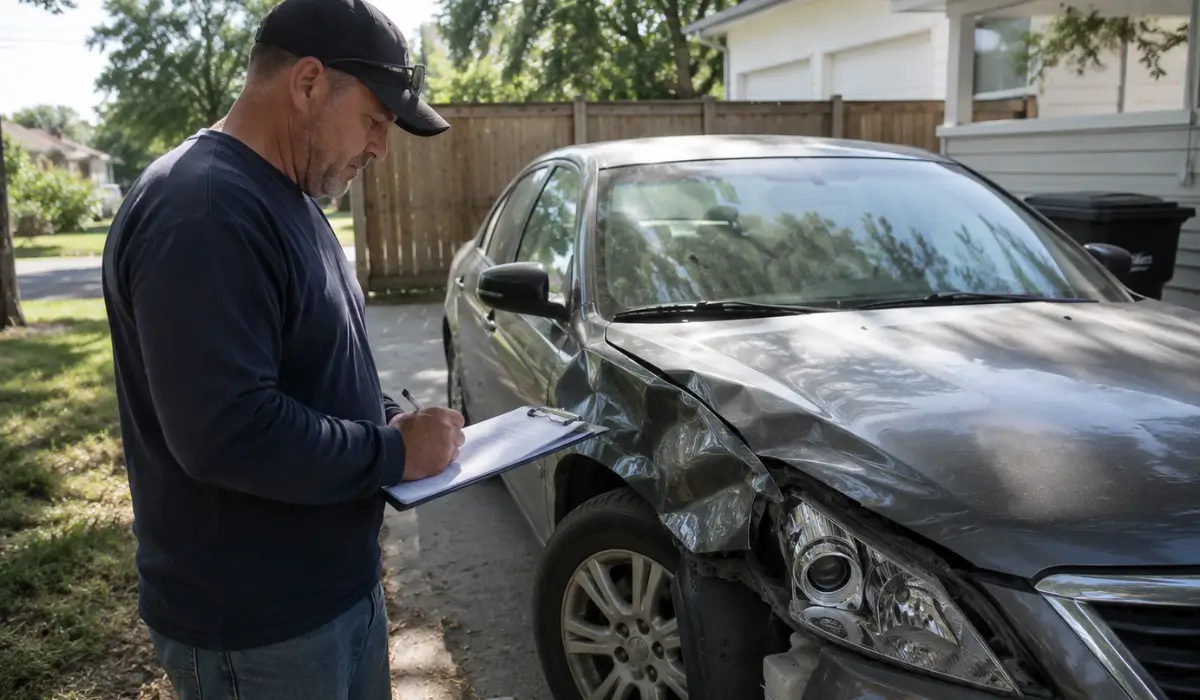
Two companies may inspect the same vehicle and provide different offers. That does not necessarily mean one is right and the other is wrong. Knowing how junk car buyers evaluate vehicles helps you compare offers more confidently and ask better questions before making a decision.
A+ Junk N Tow reviews vehicle condition, remaining factory parts, recyclable materials, required documents, market demand, and pickup requirements before providing a quote. Different operating costs, parts demand, recycling opportunities, and transportation expenses can lead to different quotes for similar vehicles.
This guide explains the vehicle evaluation process, the main factors that influence an offer, and why similar vehicles can receive different results. By knowing what happens before a quote is prepared, you can compare offers with greater confidence.
Different offers are a normal part of selling a junk vehicle because buyers do not all value every car the same way. One buyer may need original parts from your make and model, while another may focus more on recyclable metal. Local demand and removal costs also influence the final amount.
Vehicle values also change over time. Metal prices fluctuate, demand for replacement parts shifts, and hauling costs vary throughout the year. As a result, the same vehicle may receive a different offer months later even if its condition has not changed.
Consider two similar sedans in Woodridge. Both share the same year, make, and model, and neither one runs.
Although the vehicles appear similar, they offer different opportunities for parts recovery and recycling. This example illustrates how junk car prices are calculated based on the vehicle as a whole rather than a single factor.
If you’d like to understand the complete selling process, our cash for junk cars service explains what to expect before pickup.
Professional buyers follow a structured review instead of relying on a quick visual inspection. Every step adds information that helps determine the final offer.
No single factor determines the value of a junk vehicle. Buyers review the complete vehicle before providing a quote.
The review begins by confirming the vehicle’s make, model, year, trim level, and engine. These details help identify the vehicle and estimate demand for replacement parts.
Different versions of the same model may contain different engines or factory equipment. Accurate identification provides the foundation for the rest of the evaluation.
Buyers review the vehicle’s exterior, interior, and overall condition. Visible damage is important, but it represents only one part of the evaluation.
Accident damage, rust, flood exposure, missing components, and general wear help describe the vehicle’s current condition. Clear photos and accurate descriptions improve the review.
The next step focuses on the vehicle’s major systems. Buyers review the engine, transmission, drivetrain, steering, suspension, and other mechanical components that may still have value.
A vehicle that no longer runs may still contain factory equipment suitable for reuse or recycling. Mechanical problems alone do not determine the final offer.
Factory parts often remain valuable after a vehicle reaches the end of its driving life because part resale potential varies by vehicle and component.
The number and condition of these parts contribute to the overall evaluation. Missing or heavily damaged components may affect the final offer.
Recycling prices also influence vehicle evaluations. Buyers consider recyclable metal together with market conditions rather than relying on weight alone.
Recycling values change throughout the year. As prices change, offers may also change even when the vehicle remains the same.
Vehicle location is another practical part of the review. Buyers consider whether the vehicle rolls freely, where it is parked, and whether additional equipment may be needed for removal.
A vehicle parked in an open driveway is often easier to remove than one located inside a garage or behind other vehicles. Knowing these details beforehand helps buyers plan the pickup.
Required documents are reviewed before the sale is completed. Having the necessary paperwork ready helps the ownership transfer move more efficiently.
These documents support the selling process but do not increase the vehicle’s physical value. Their purpose is to help complete the transaction correctly.
After reviewing each step, buyers combine the information to determine an offer. Vehicle details, condition, remaining parts, market demand, recycling value, pickup requirements, and required documents are considered together.
Because every buyer operates differently, similar vehicles may still receive different offers. Comparing how each buyer explains the evaluation often provides a clearer picture than comparing only the quoted amount.
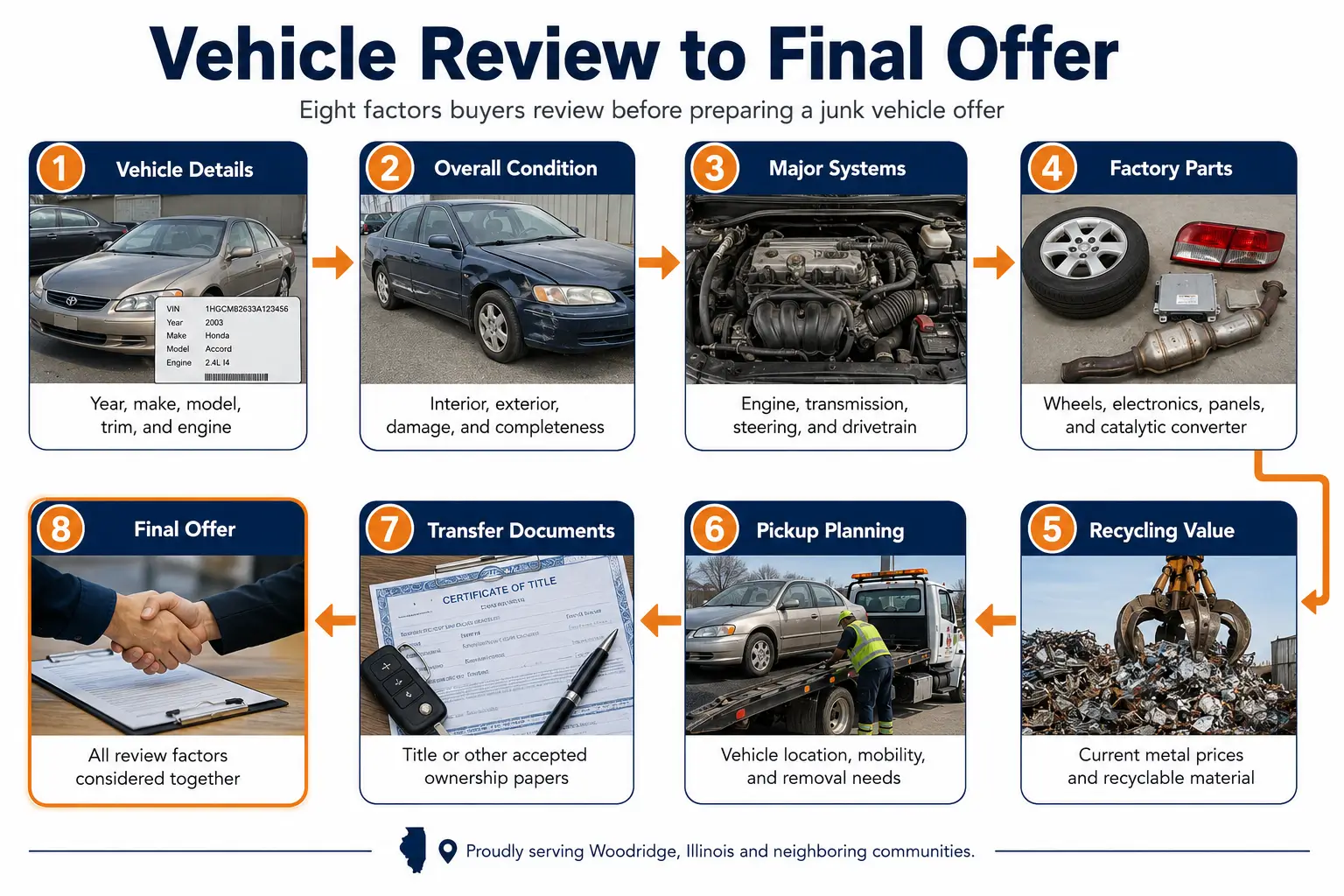
Several factors work together during every evaluation. Looking at these categories instead of individual parts makes it easier to understand why offers can vary.
No single category determines the final amount. Buyers consider the combined information before determining an offer.
Vehicle identity provides the starting point for every evaluation. The make, model, and year are important car value factors that help identify the vehicle and estimate replacement-part demand.
Different trim levels and engine options may contain different factory equipment. Accurate vehicle information supports a more reliable evaluation.
Vehicle Identity includes:
Mechanical condition helps identify which major systems remain with the vehicle. Even when repairs are no longer practical, factory equipment may still contribute to the evaluation.
Mechanical Health includes:
Salvage potential considers the value that may remain after a vehicle reaches the end of its driving life. Buyers review reusable parts, recyclable materials, and overall vehicle completeness together.
A vehicle with more factory equipment may provide additional opportunities for reuse or recycling. Market demand also influences how these remaining materials are evaluated.
Salvage Potential includes:
Many vehicles continue to provide value through responsible parts recovery and material recycling after reaching the end of their driving life. Guidance from the U.S. Environmental Protection Agency also supports responsible materials management and recycling practices.
Local market conditions influence every vehicle evaluation because replacement-part demand, recycling prices, and transportation costs change over time. Even when the vehicle stays the same, those changes can affect the final offer.
Woodridge includes commuter cars, family SUVs, work trucks, and older vehicles that have reached the end of their useful life. Buyer inventory, travel distance, and local demand all become part of the evaluation before a quote is provided.
| Local Market Factor | Why It Matters |
|---|---|
| 📦 Replacement Part Demand | Popular factory parts that remain in demand locally may increase the vehicle's overall value during the evaluation. |
| ♻️ Scrap Metal Prices | Recycling values change as metal markets rise and fall, which can influence the recyclable portion of a vehicle's value. |
| 🚚 Travel Distance | Pickup distance may affect transportation costs, particularly for vehicles located farther from the towing service area. |
| 🅿️ Vehicle Accessibility | Vehicles that are easy to reach generally simplify loading and removal, while blocked or difficult locations may require additional equipment. |
| 📊 Local Inventory | Regional supply and demand for similar vehicles and reusable components can influence the overall vehicle evaluation. |
These market conditions support the evaluation instead of replacing it. Weight and make can also influence an evaluation because larger vehicles often contain more recyclable metal, while some manufacturers have greater demand for replacement parts.
Our higher junk car offers guide explains how changing local conditions can influence offers.
The final offer reflects the complete vehicle evaluation instead of one individual detail. Buyers consider vehicle condition, remaining factory parts, required documents, market demand, and pickup requirements before determining an offer.
Many people expect collision damage or a failed engine to determine the entire amount. In most cases, several factors work together, which is why similar vehicles can receive different offers.
The scorecard below provides an offer breakdown for a junk car by showing how buyers typically weigh different parts of the evaluation.
| Evaluation Factor | Typical Influence |
|---|---|
| Vehicle Completeness |
|
| Required Documents |
|
| Market Demand |
|
| Pickup Accessibility |
|
| Overall Condition |
|
Vehicle completeness often has a greater influence because more factory parts may remain available for reuse or recycling. Missing wheels, catalytic converters, electronics, or body panels can reduce the number of reusable components.
Reviewing every category together provides a clearer explanation of why one vehicle may receive a different offer than another. The final amount reflects the complete evaluation instead of one individual factor.
Knowing how a vehicle is evaluated makes it easier to compare buyers instead of looking only at the quoted amount. Clear answers also explain what is included before agreeing to sell.
Every written offer should explain whether towing is included, when payment will be made, and which vehicle details could change the quoted amount before pickup.
Providing complete vehicle information is just as important as asking questions. Let buyers know about accident damage, missing parts, flat tires, flood damage, or limited vehicle access before requesting an offer.
Clear answers should match the written offer. Knowing how a buyer explains the evaluation process makes it easier to compare local companies.
A+ Junk N Tow explains how our team reviews vehicles before providing a quote. It also shares more about our company and the services we provide.
Water damage may affect more than a vehicle’s appearance. Our Flood-Damaged Vehicle Guide explains how flood exposure may influence a vehicle evaluation.
Woodridge includes established neighborhoods with driveways, garages, townhomes, and residential streets. Vehicle location and property access can influence how removal is planned before pickup.
Family vehicles, commuter cars, SUVs, and work trucks are common throughout the community. Buyers serving the Woodridge area are often familiar with local neighborhoods and common pickup locations, which can help streamline vehicle removal planning.
Providing accurate vehicle information before requesting an offer helps buyers review the vehicle more efficiently. It can also reduce unnecessary follow-up questions and help prepare for pickup more smoothly.
✅ Vehicle evaluations are based on multiple factors.
✅ Different buyers may use different valuation models.
✅ Transparency helps you compare offers more effectively.
✅ Asking questions leads to more informed decisions.
Before reviewing the questions below, you can also visit our Junk Car Selling FAQs for answers about paperwork, payment, vehicle eligibility, and other common topics.
Vehicle evaluations often raise questions about pricing, paperwork, towing, and the review process. The answers below address several topics sellers ask most often.
Policies and procedures may differ between buyers. Reviewing the written offer before pickup helps avoid misunderstandings.
Online quotes are based on the information available during the initial request. Additional damage, missing parts, or differences identified during the evaluation may change the final offer.
Providing complete vehicle information from the beginning supports a more reliable estimate. It also helps reduce unexpected changes before pickup.
Required documents help complete the ownership process, but they do not increase the physical value of the vehicle. Their main purpose is to support the legal transfer of ownership.
Requirements may vary depending on the situation. Sellers should confirm current Illinois requirements before arranging pickup.
Towing policies vary between buyers and service areas. Ask whether vehicle removal is included and whether distance or access limitations apply before accepting an offer.
Understanding exactly what is included makes it easier to compare offers fairly. A written explanation also helps avoid misunderstandings.
Every buyer uses a different evaluation process. Asking how the offer was determined helps you compare buyers using the same information instead of relying only on the quoted amount.
Industry discussions, including those published by Auto Recycling World, explain how vehicle recycling practices continue to change across the recycling industry.
Every vehicle has a different history, so offers should reflect its condition, remaining factory parts, required documents, market demand, and pickup requirements. Comparing the complete evaluation—not just the quoted amount—helps you make a more informed decision.
Request your cash offer for a no-obligation vehicle evaluation based on the information you provide.
Questions before getting started? (708) 968-2505