A+ Junk N Tow Cash For Junk Cars

Cash For Junk Cars

You can get cash for junk cars in whatever shape at A+ Junk n tow Cash For Junk Cars in Illinois. We pay you regardless of the condition and accept all the makes and models out there. You can sell junk car to A+ Junk n tow Cash For Junk Cars no matter what type of damage you have. We buy wrecked, burned, totaled, old, used, trucks, sedans, cars, and SUV’s. The vehicle can be running or not.

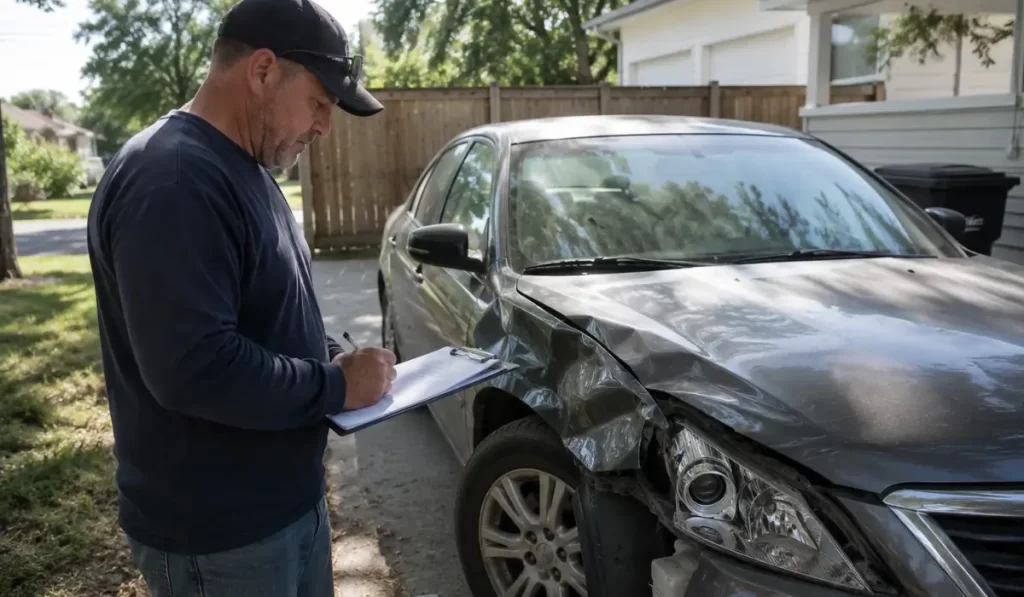
How junk car buyers calculate offers by inspecting vehicle damage, condition, parts, and overall value before pickup.

How Junk Car Buyers Determine Your Offer

How junk car buyers calculate offers by inspecting vehicle damage, condition, parts, and overall value before pickup.

How Junk Car Buyers Determine Your Offer

Two companies may inspect the same vehicle and provide different offers. That does not necessarily mean one is right and the other is wrong. Knowing how junk car buyers evaluate vehicles helps you compare offers more confidently and ask better questions before making a decision.

A+ Junk N Tow reviews vehicle condition, remaining factory parts, recyclable materials, required documents, market demand, and pickup requirements before providing a quote. Different operating costs, parts demand, recycling opportunities, and transportation expenses can lead to different quotes for similar vehicles.

This guide explains the vehicle evaluation process, the main factors that influence an offer, and why similar vehicles can receive different results. By knowing what happens before a quote is prepared, you can compare offers with greater confidence.

Why Junk Car Offers Vary

Different offers are a normal part of selling a junk vehicle because buyers do not all value every car the same way. One buyer may need original parts from your make and model, while another may focus more on recyclable metal. Local demand and removal costs also influence the final amount.

Why Similar Vehicles Can Receive Different Offers

Vehicle values also change over time. Metal prices fluctuate, demand for replacement parts shifts, and hauling costs vary throughout the year. As a result, the same vehicle may receive a different offer months later even if its condition has not changed.

Consider two similar sedans in Woodridge. Both share the same year, make, and model, and neither one runs.

  • Vehicle A: Factory wheels, original catalytic converter, complete interior, and proof of ownership.
  • Vehicle B: Missing several original parts and parked where additional towing equipment is required.

Although the vehicles appear similar, they offer different opportunities for parts recovery and recycling. This example illustrates how junk car prices are calculated based on the vehicle as a whole rather than a single factor.

If you’d like to understand the complete selling process, our cash for junk cars service explains what to expect before pickup.

Inside the Vehicle Evaluation Process

Professional buyers follow a structured review instead of relying on a quick visual inspection. Every step adds information that helps determine the final offer.

No single factor determines the value of a junk vehicle. Buyers review the complete vehicle before providing a quote.

The Eight-Step Vehicle Evaluation Journey

1. Vehicle Identification

The review begins by confirming the vehicle’s make, model, year, trim level, and engine. These details help identify the vehicle and estimate demand for replacement parts.

Different versions of the same model may contain different engines or factory equipment. Accurate identification provides the foundation for the rest of the evaluation.

2. Condition Assessment

Buyers review the vehicle’s exterior, interior, and overall condition. Visible damage is important, but it represents only one part of the evaluation.

Accident damage, rust, flood exposure, missing components, and general wear help describe the vehicle’s current condition. Clear photos and accurate descriptions improve the review.

3. Mechanical Review

The next step focuses on the vehicle’s major systems. Buyers review the engine, transmission, drivetrain, steering, suspension, and other mechanical components that may still have value.

A vehicle that no longer runs may still contain factory equipment suitable for reuse or recycling. Mechanical problems alone do not determine the final offer.

4. Parts Evaluation

Factory parts often remain valuable after a vehicle reaches the end of its driving life because part resale potential varies by vehicle and component.

The number and condition of these parts contribute to the overall evaluation. Missing or heavily damaged components may affect the final offer.

5. Scrap Market Review

Recycling prices also influence vehicle evaluations. Buyers consider recyclable metal together with market conditions rather than relying on weight alone.

Recycling values change throughout the year. As prices change, offers may also change even when the vehicle remains the same.

6. Pickup Logistics

Vehicle location is another practical part of the review. Buyers consider whether the vehicle rolls freely, where it is parked, and whether additional equipment may be needed for removal.

A vehicle parked in an open driveway is often easier to remove than one located inside a garage or behind other vehicles. Knowing these details beforehand helps buyers plan the pickup.

7. Documentation Review

Required documents are reviewed before the sale is completed. Having the necessary paperwork ready helps the ownership transfer move more efficiently.

These documents support the selling process but do not increase the vehicle’s physical value. Their purpose is to help complete the transaction correctly.

8. Final Offer

After reviewing each step, buyers combine the information to determine an offer. Vehicle details, condition, remaining parts, market demand, recycling value, pickup requirements, and required documents are considered together.

Because every buyer operates differently, similar vehicles may still receive different offers. Comparing how each buyer explains the evaluation often provides a clearer picture than comparing only the quoted amount.

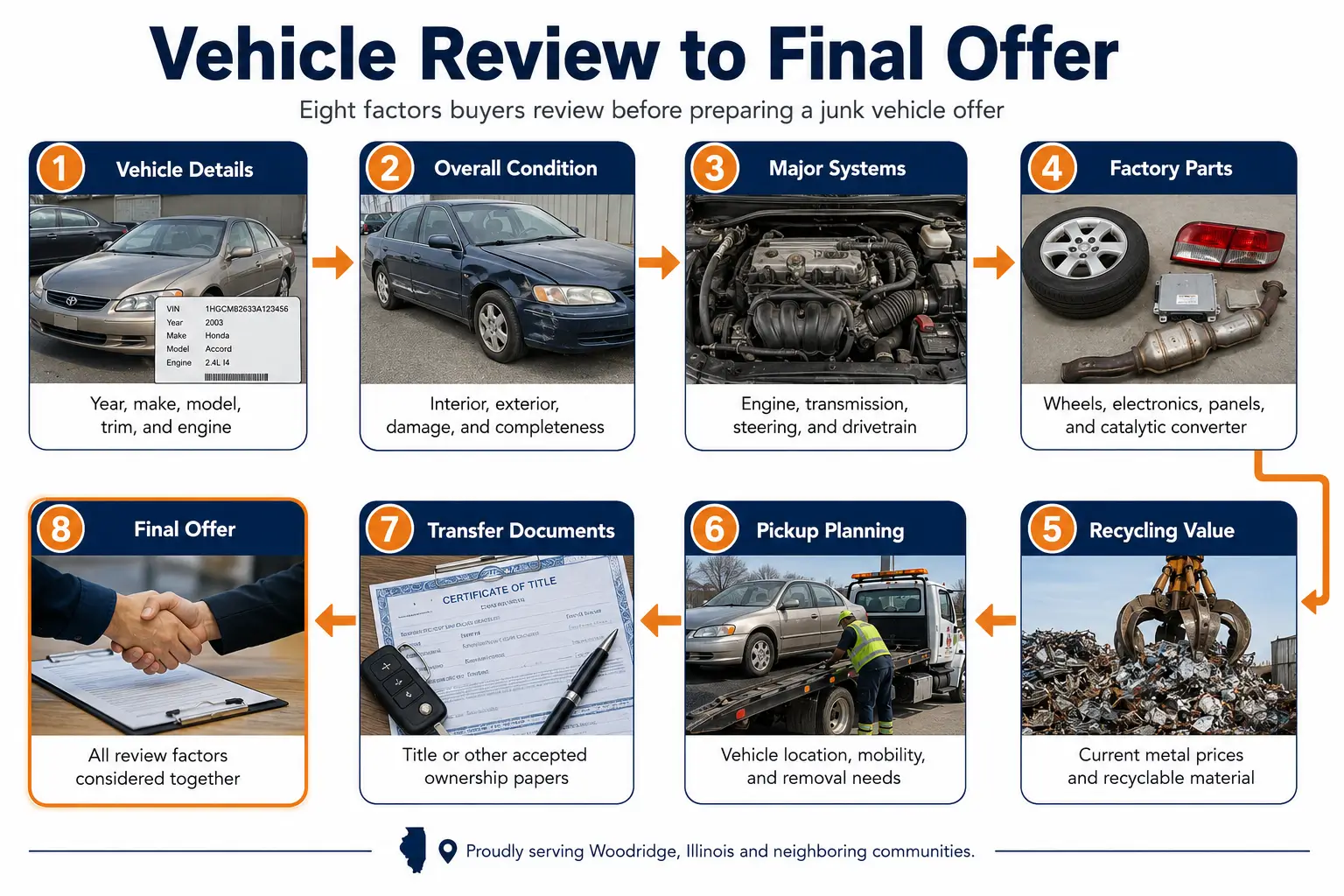
Flowchart showing how junk car buyers calculate offers through eight vehicle review steps to final offer.
Eight Steps Buyers Review Before Preparing Your Final Offer

The Biggest Factors Buyers Review

Several factors work together during every evaluation. Looking at these categories instead of individual parts makes it easier to understand why offers can vary.

No single category determines the final amount. Buyers consider the combined information before determining an offer.

Vehicle Details

Vehicle identity provides the starting point for every evaluation. The make, model, and year are important car value factors that help identify the vehicle and estimate replacement-part demand. 

Different trim levels and engine options may contain different factory equipment. Accurate vehicle information supports a more reliable evaluation.

Vehicle Identity includes:

  • Make
  • Model
  • Year

Mechanical Health

Mechanical condition helps identify which major systems remain with the vehicle. Even when repairs are no longer practical, factory equipment may still contribute to the evaluation.

Mechanical Health includes:

  • Engine
  • Transmission
  • Drivetrain

Salvage Potential

Salvage potential considers the value that may remain after a vehicle reaches the end of its driving life. Buyers review reusable parts, recyclable materials, and overall vehicle completeness together.

A vehicle with more factory equipment may provide additional opportunities for reuse or recycling. Market demand also influences how these remaining materials are evaluated.

Salvage Potential includes:

  • Reusable parts
  • Recyclable materials
  • Vehicle completeness

Many vehicles continue to provide value through responsible parts recovery and material recycling after reaching the end of their driving life. Guidance from the U.S. Environmental Protection Agency also supports responsible materials management and recycling practices.

Why Local Market Conditions Matter

Local market conditions influence every vehicle evaluation because replacement-part demand, recycling prices, and transportation costs change over time. Even when the vehicle stays the same, those changes can affect the final offer.

Woodridge includes commuter cars, family SUVs, work trucks, and older vehicles that have reached the end of their useful life. Buyer inventory, travel distance, and local demand all become part of the evaluation before a quote is provided.

Local Market Factor Why It Matters
📦 Replacement Part Demand Popular factory parts that remain in demand locally may increase the vehicle's overall value during the evaluation.
♻️ Scrap Metal Prices Recycling values change as metal markets rise and fall, which can influence the recyclable portion of a vehicle's value.
🚚 Travel Distance Pickup distance may affect transportation costs, particularly for vehicles located farther from the towing service area.
🅿️ Vehicle Accessibility Vehicles that are easy to reach generally simplify loading and removal, while blocked or difficult locations may require additional equipment.
📊 Local Inventory Regional supply and demand for similar vehicles and reusable components can influence the overall vehicle evaluation.
Quick takeaway: Local market conditions work alongside the vehicle's condition to influence an estimate. Parts demand, recycling prices, pickup logistics, and regional inventory can all affect the final offer.

These market conditions support the evaluation instead of replacing it. Weight and make can also influence an evaluation because larger vehicles often contain more recyclable metal, while some manufacturers have greater demand for replacement parts.

Our higher junk car offers guide explains how changing local conditions can influence offers.

What Can Influence Your Final Offer?

The final offer reflects the complete vehicle evaluation instead of one individual detail. Buyers consider vehicle condition, remaining factory parts, required documents, market demand, and pickup requirements before determining an offer.

Many people expect collision damage or a failed engine to determine the entire amount. In most cases, several factors work together, which is why similar vehicles can receive different offers.

Vehicle Evaluation Scorecard

The scorecard below provides an offer breakdown for a junk car by showing how buyers typically weigh different parts of the evaluation.

Evaluation Factor Typical Influence
Vehicle Completeness
Very High
Required Documents
Very High
Market Demand
High
Pickup Accessibility
High
Overall Condition
Moderate
Quick takeaway: Vehicle completeness and the required ownership documents typically have the greatest influence during a vehicle evaluation. Market conditions, pickup logistics, and overall condition also contribute to the final review.

Vehicle completeness often has a greater influence because more factory parts may remain available for reuse or recycling. Missing wheels, catalytic converters, electronics, or body panels can reduce the number of reusable components.

Reviewing every category together provides a clearer explanation of why one vehicle may receive a different offer than another. The final amount reflects the complete evaluation instead of one individual factor.

Questions Smart Sellers Ask During an Appraisal

Knowing how a vehicle is evaluated makes it easier to compare buyers instead of looking only at the quoted amount. Clear answers also explain what is included before agreeing to sell.

Every written offer should explain whether towing is included, when payment will be made, and which vehicle details could change the quoted amount before pickup.

Helpful Questions

  • How was my vehicle reviewed?
  • Is towing included?
  • Does missing equipment affect the offer?
  • How long is the quote valid?

Providing complete vehicle information is just as important as asking questions. Let buyers know about accident damage, missing parts, flat tires, flood damage, or limited vehicle access before requesting an offer.

Clear answers should match the written offer. Knowing how a buyer explains the evaluation process makes it easier to compare local companies.

A+ Junk N Tow explains how our team reviews vehicles before providing a quote. It also shares more about our company and the services we provide.

Water damage may affect more than a vehicle’s appearance. Our Flood-Damaged Vehicle Guide explains how flood exposure may influence a vehicle evaluation.

Local Vehicle Pickup

Woodridge Perspective

Neighborhood Access Can Affect Pickup

Woodridge includes established neighborhoods with driveways, garages, townhomes, and residential streets. Vehicle location and property access can influence how removal is planned before pickup.

Local Pickup Considerations

Family vehicles, commuter cars, SUVs, and work trucks are common throughout the community. Buyers serving the Woodridge area are often familiar with local neighborhoods and common pickup locations, which can help streamline vehicle removal planning.

Pro Tip

Providing accurate vehicle information before requesting an offer helps buyers review the vehicle more efficiently. It can also reduce unnecessary follow-up questions and help prepare for pickup more smoothly.

Key Takeaways

✅ Vehicle evaluations are based on multiple factors.
✅ Different buyers may use different valuation models.
✅ Transparency helps you compare offers more effectively.
✅ Asking questions leads to more informed decisions.

Before reviewing the questions below, you can also visit our Junk Car Selling FAQs for answers about paperwork, payment, vehicle eligibility, and other common topics.

Seller Questions

Frequently Asked Questions

Vehicle evaluations often raise questions about pricing, paperwork, towing, and the review process. The answers below address several topics sellers ask most often.

Policies and procedures may differ between buyers. Reviewing the written offer before pickup helps avoid misunderstandings.

Why do online quotes sometimes change?

Online quotes are based on the information available during the initial request. Additional damage, missing parts, or differences identified during the evaluation may change the final offer.

Providing complete vehicle information from the beginning supports a more reliable estimate. It also helps reduce unexpected changes before pickup.

Does a clean title increase the offer?

Required documents help complete the ownership process, but they do not increase the physical value of the vehicle. Their main purpose is to support the legal transfer of ownership.

Requirements may vary depending on the situation. Sellers should confirm current Illinois requirements before arranging pickup.

Is towing always included?

Towing policies vary between buyers and service areas. Ask whether vehicle removal is included and whether distance or access limitations apply before accepting an offer.

Understanding exactly what is included makes it easier to compare offers fairly. A written explanation also helps avoid misunderstandings.

Can I negotiate the offer?

Every buyer uses a different evaluation process. Asking how the offer was determined helps you compare buyers using the same information instead of relying only on the quoted amount.

Industry discussions, including those published by Auto Recycling World, explain how vehicle recycling practices continue to change across the recycling industry.

No-Obligation Vehicle Review

Ready for a Transparent Vehicle Review?

Every vehicle has a different history, so offers should reflect its condition, remaining factory parts, required documents, market demand, and pickup requirements. Comparing the complete evaluation—not just the quoted amount—helps you make a more informed decision.

✓ No-Obligation Evaluation ✓ Condition-Based Review ✓ Free Towing Available

Request your cash offer for a no-obligation vehicle evaluation based on the information you provide.

Questions before getting started? (708) 968-2505

How Junk Car Buyers Determine Your Offer Read More »

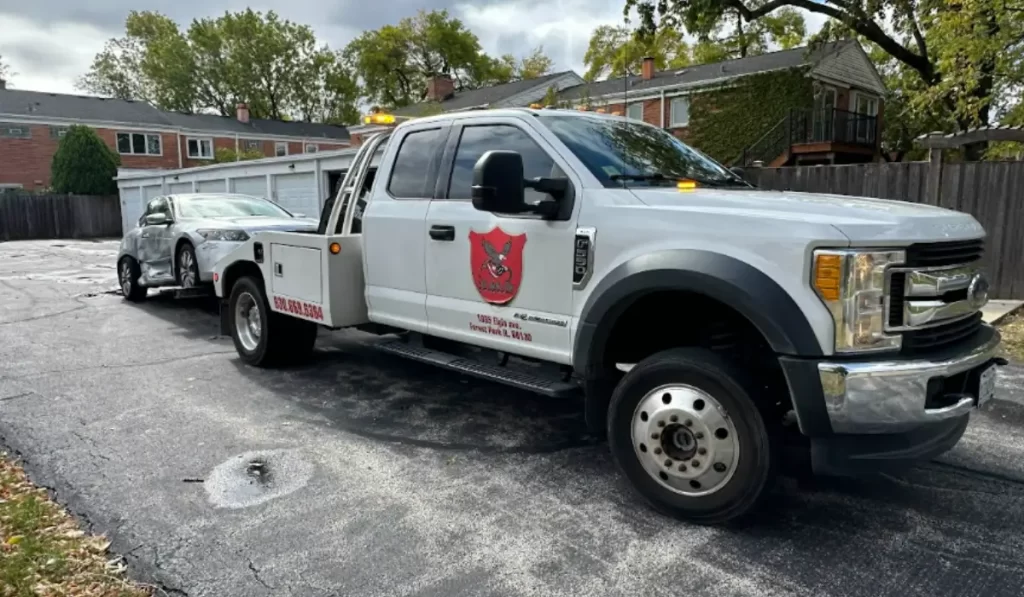
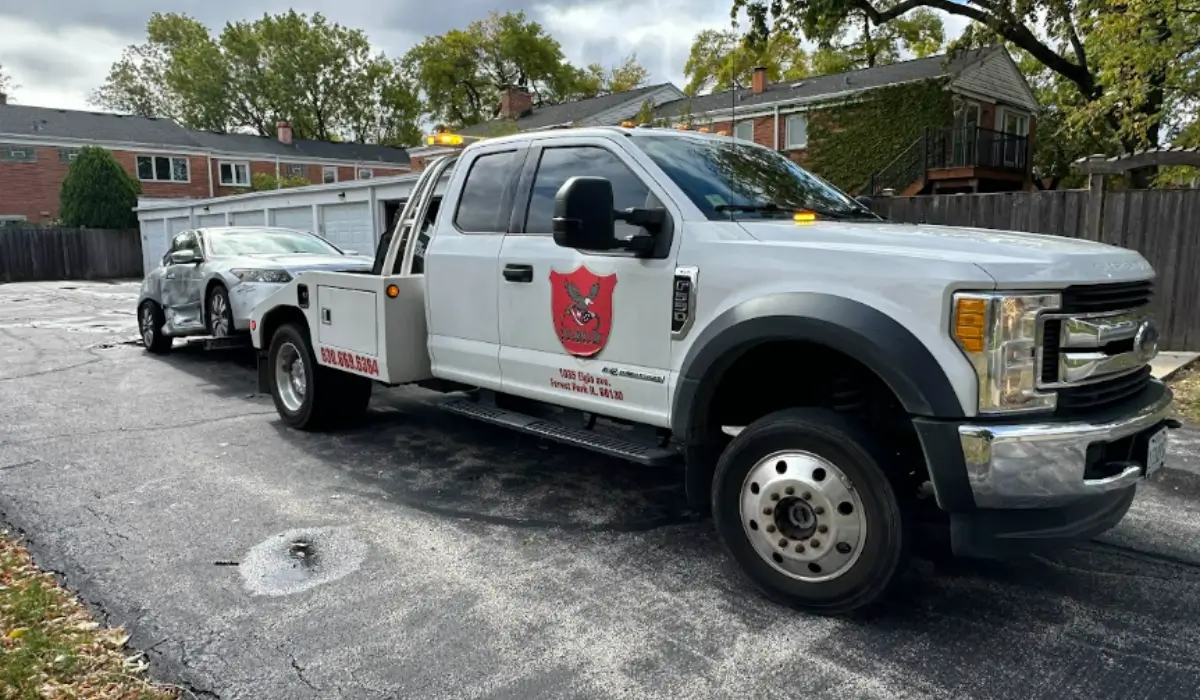
Wheel-lift tow truck removing a collision-damaged sedan in an Illinois neighborhood, illustrating the junk car value process.

2026 Junk Car Value Guide: How Much Is It Worth?

Wheel-lift tow truck removing a collision-damaged sedan in an Illinois neighborhood, illustrating the junk car value process.

2026 Junk Car Value Guide: How Much Is It Worth?

A vehicle can still have value even when it no longer runs. Junk car value depends on its condition, reusable parts, recyclable materials, local demand, and pickup needs rather than whether the engine starts. Understanding these factors can help you compare an offer with repair, storage, insurance, and ownership costs.

Many owners focus on one problem, such as a failed engine or transmission. That can hide other sources of value, including original wheels, an intact catalytic converter, recyclable metal, and parts that may still be useful.

A+ Junk N Tow explains the review process before preparing an offer. We want vehicle owners to understand what affects a quote, what information buyers need, and why two similar cars may receive different offers.

Why Similar Vehicles Can Receive Different Offers

Two vehicles with the same year, make, and model can receive different offers because their condition and remaining parts are rarely identical. Mileage matters, but buyers also review damage, maintenance, missing components, pickup access, and demand for usable parts.

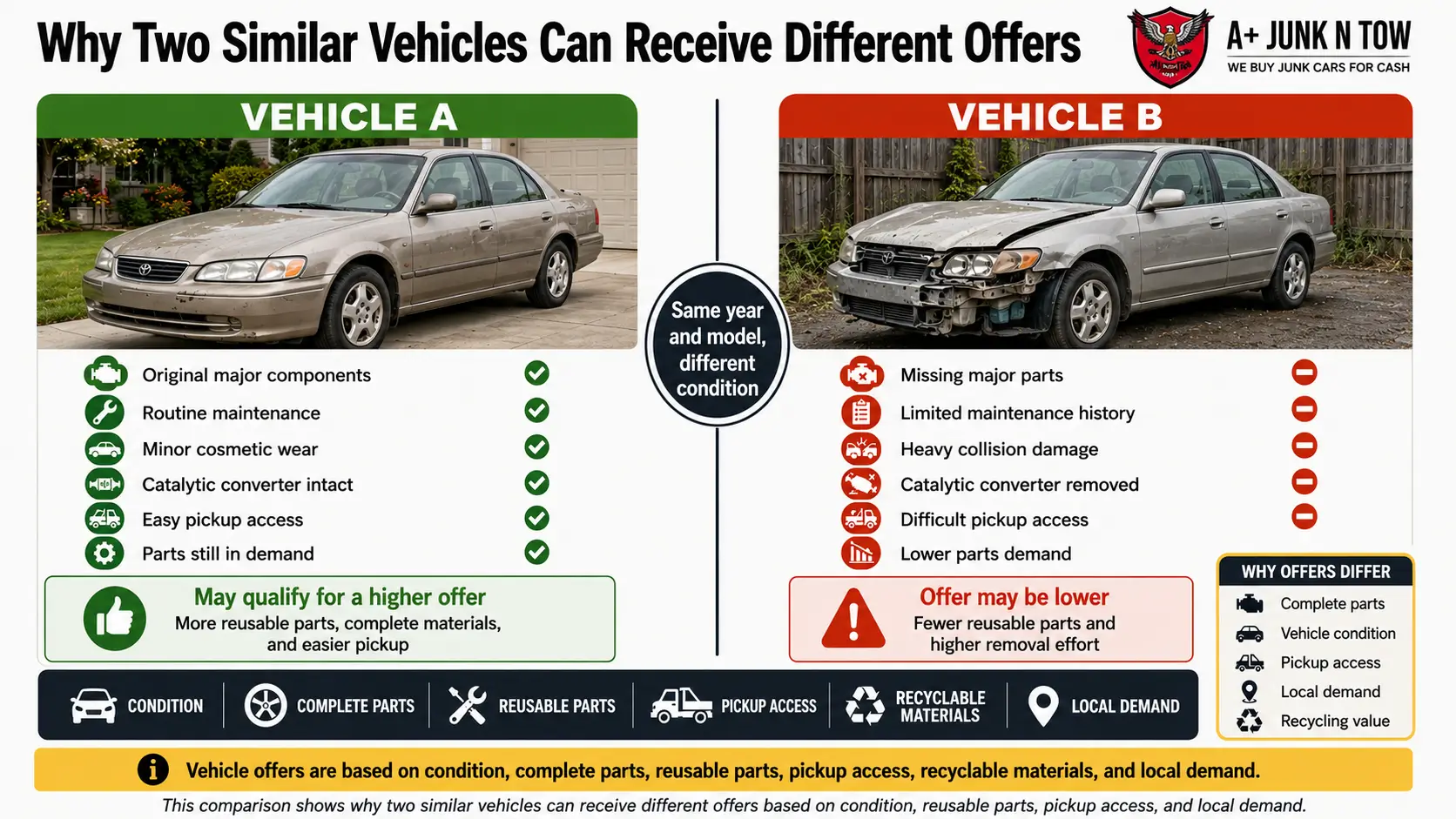
Picture two 2012 sedans parked side by side. The first has its original catalytic converter, four wheels, a complete engine, and minor body wear. The second has missing wheels, heavy collision damage, and several removed parts.

Their age is the same, but the amount of usable material left in each vehicle is not. That difference can have a direct effect on car scrap value.

Vehicle A Vehicle B
🟢 Original major components 🔴 Several missing parts
🟢 Minor cosmetic wear 🔴 Heavy collision damage
🟢 Original catalytic converter 🔴 Converter removed
🟢 Easy driveway access 🔴 Difficult pickup access
🟢 Parts still in demand 🔴 Limited local parts demand
i
Key point: Vehicle A may look older, yet its complete parts and easier pickup can support a stronger offer. Vehicle B may require extra towing equipment or provide fewer reusable components.

Vehicle A may look older, yet its complete parts and easier pickup can support a stronger offer. Vehicle B may require extra towing equipment or provide fewer reusable components.

The best comparison is not simply one model year against another. The more useful comparison looks at what remains in each car, what can still be used, and what is required to remove it safely.

Looking Beyond Appearance With Junk Car Value

Visible body damage is only one part of a vehicle review. Buyers also check whether the engine, transmission, wheels, battery, catalytic converter, and electronic parts remain in place.

What we often see is that owners underestimate cars with faded paint or dents while overestimating cleaner-looking cars that are missing major components. Cosmetic wear may affect some body parts, but missing equipment can reduce both parts value and recycling value.

Clear photos reduce that uncertainty. Useful photos show the front, rear, both sides, wheels, interior, VIN area, and any major damage.

Accurate details can also reduce the chance of an offer changing after the vehicle is inspected. A buyer can prepare a better quote when the photos and description match the car’s actual condition.

The Six Factors That Influence Junk Car Value

A fair vehicle offer is built from several connected factors, not one public scrap price. Condition, complete parts, material content, demand, pickup access, and current recycling activity can all affect the amount a buyer may offer.

Our team uses six simple points to explain the main parts of a vehicle review. This method does not create a fixed price because each car has a different condition, location, and mix of usable material.

The framework below shows why two quotes may differ even when the vehicles appear similar.

A+ Vehicle Assessment

The A+ Six-Point Vehicle Value Check

01

Vehicle Condition

Accident damage, fire exposure, rust, and major mechanical problems affect what can be reused and recycled.

02

Complete Components

Original wheels, the catalytic converter, engine parts, and other major items may affect the offer.

03

Metal and Material Content

Steel, aluminum, copper, and other materials contribute to car metal worth, but not the full offer.

04

Demand for Usable Parts

Engines, transmissions, modules, and body parts may add value when demand remains strong.

05

Pickup Access

Open driveway access is usually easier than a blocked garage, missing wheels, or soft ground.

06

Current Recycling Demand

Metal and parts demand can change, so a quote may differ from one prepared months earlier.

A heavier vehicle may contain more metal, but damage, missing parts, and towing needs can still lower the final offer. Weight alone does not provide a reliable estimate.

Searches for price per ton vehicle often miss an important point. A car’s total weight includes glass, rubber, fluids, fabric, plastic, and other non-metal materials, so the full weight cannot be multiplied by a clean-metal rate.

How Buyers Review the Whole Vehicle

Every review starts with accurate information provided by the owner. Buyers generally ask for the year, make, model, mileage, running condition, major damage, missing parts, pickup location, and proof of ownership before preparing an estimate.

Based on actual scenarios, a higher-mileage vehicle may receive a stronger offer than a newer vehicle because it still has complete parts that remain in demand. On the other hand, a newer vehicle with severe fire damage or several missing components may provide fewer opportunities for recycling or reuse.

Instead of using one fixed formula, buyers normally look at three areas during the review.

Material value

Recyclable steel, aluminum, copper, and other metals contribute to the vehicle’s recycling value. Metal prices influence offers, but they are only one part of the overall review.

Parts value

Engines, transmissions, catalytic converters, electronic modules, wheels, and body panels may increase value when they remain complete and are still useful for repairs or rebuilding.

Pickup requirements

Vehicle location, towing access, and the equipment needed for removal also affect the review. A vehicle that does not roll, steer, or has limited access may require additional planning before pickup.

These factors work together to create a more accurate estimate. Looking at only one factor, such as weight or age, rarely reflects the vehicle’s complete value. Many owners read our cash for junk cars page before requesting an estimate.

The U.S. Environmental Protection Agency’s recycling resources explain how responsible recycling helps recover valuable materials while reducing waste.

Owners who want to learn more about the recycling process can also read our guide explaining what happens to your junk car after pickup.

Junk car value comparison showing similar vehicles with different conditions affecting offers through pickup access today.
Vehicle Comparison Showing Why Junk Car Offers Differ

2026 Market Forces That Affect Vehicle Offers

Vehicle offers can change even when the car stays in the same condition. Recycling demand, transportation costs, manufacturing needs, and replacement-part shortages can all affect how buyers prepare an offer.

The phrase junk car value 2026 does not represent one fixed amount for every vehicle. A heavy truck may contain more recyclable metal, while a smaller sedan may have parts that remain in stronger demand.

Search terms such as market price junk cars often suggest that owners expect one standard rate. In practice, local demand, condition, missing parts, and pickup costs prevent one rate from applying to every vehicle.

Market Conditions That Influence Offers

  • Demand for recycled steel and aluminum
  • Availability of replacement parts
  • Fuel and towing costs
  • Local demand for certain makes and models
  • Processing costs charged by recycling facilities

These factors do not guarantee that prices will rise or fall. They help explain why an offer prepared today may differ from one prepared several months earlier.

In many real cases, owners wait for a higher metal price while the car continues to rust, lose parts, or become harder to move. Market timing matters, but the condition of the vehicle may change faster than the market.

The Recycled Materials Association provides public information about recycled material use and recycling markets.

Parts That Can Affect Your Vehicle Review

Some parts can add value long after a vehicle stops running. Buyers often check original wheels, batteries, alternators, electronic modules, and catalytic converters because each item may still have use or recycling value.

Removing parts before requesting a quote can lower the whole-vehicle offer. A part that seems valuable on its own may also make the remaining car harder to move, inspect, or recycle safely.

Parts buyers often review include:

  • OEM wheels and aluminum rims: These may be reused when they are straight and undamaged.
  • Battery: A battery may retain recycling or core value even when it no longer holds a full charge.
  • Alternator: Some alternators can be rebuilt when the housing and internal parts remain usable.
  • Electronic control modules: Demand depends on the model, part number, and condition.
  • Catalytic converter: Its value can vary widely by vehicle type, converter design, and whether the original unit remains in place.
  • Engine and transmission parts: Complete units may have parts value even when the vehicle does not run.

Condition matters as much as the part itself. A cracked wheel, damaged module, or missing converter will not add the same value as a complete component.

What we often see is that owners remove one or two parts, then receive a lower quote for the car that remains. Selling parts separately may make sense for someone with tools, storage space, and buyers ready to purchase them. A+ Junk n Tow reviews the vehicle as a whole before confirming an offer.

Drivers with a non-running car can read our non-running vehicle guide for details about condition, access, and pickup needs.

Common Myths About Vehicle Value

Many owners make decisions using ideas that do not match how vehicle buyers review cars. Age, rust, and running condition matter, but none of them decides the full offer by itself.

A simple fact check can prevent owners from removing useful parts, accepting an incomplete quote, or paying storage costs for a car they no longer use.

Junk Car Value Facts

Common Myths About Junk Car Offers

Myth: A non-running car has no value.

Fact: It may still contain usable parts and recyclable metal.

Myth: Older vehicles always bring lower offers.

Fact: Some older models have parts that remain hard to find.

Myth: Rust makes every vehicle worthless.

Fact: Surface rust and deep frame damage affect value differently.

Myth: Every buyer calculates offers the same way.

Fact: Towing costs, parts demand, and recycling partners can vary.

These differences matter because a quote should reflect the vehicle’s real condition, not a general rule. Owners should compare the details behind each offer instead of looking only at the final amount.

A clear quote should identify the vehicle information used, the pickup plan, and any condition that could change the amount. That level of detail makes weak or incomplete estimates easier to spot.

What Willowbrook Drivers Should Know

Illinois weather can gradually affect a vehicle’s condition. Road salt, moisture, freezing temperatures, and long periods outdoors may damage body panels, brake components, frames, and electrical systems, which can influence the condition buyers review during an appraisal.

Daily Driving Can Still Leave Value Behind

Many Willowbrook and DuPage County drivers rely on their vehicles for commuting, family transportation, and everyday errands. Those driving habits often increase mileage, but they do not automatically eliminate the value of reusable parts or recyclable materials that may still remain in the vehicle.

Vehicle Location Can Affect Pickup

Safe junk car removal also depends on where the vehicle is located. A car parked in an open driveway is usually easier to load than one inside a narrow garage, resting on soft ground, or missing several wheels. Before pickup, we review the vehicle’s location so the appropriate towing equipment can be prepared for a safe and efficient removal.

Drivers who want to confirm whether we provide service in their area can review our Illinois pickup service areas. Knowing your location in advance helps us plan the pickup and provide a smoother experience from the initial estimate to vehicle removal.

Comparing Local Offers

Owners comparing local offers often notice that small differences in condition, reusable parts, and pickup access can influence the final review.

Comparing several local quotes can help you understand how buyers evaluate similar vehicles.

Preparing for a More Accurate Estimate

Accurate details help buyers prepare a quote that is closer to the final offer. Clear photos and honest answers reduce the chance of delays or changes during pickup.

Useful photos show the front, rear, both sides, wheels, interior, VIN area, and major damage. Owners should also report missing parts, accident damage, fire or flood exposure, and whether the car rolls, steers, and starts.

A buyer may ask for proof of ownership before pickup. The document required can depend on the vehicle and local rules, so confirming this point early can prevent delays.

What Happens After the Quote

  1. Vehicle details are reviewed.
  2. An offer is prepared.
  3. Ownership information is checked.
  4. A pickup time is arranged.
  5. Payment is completed when the agreed conditions are met.

Online quotes are based on the information provided before the vehicle is inspected. If major damage or missing parts were not disclosed, the offer may need to be reviewed during the inspection.

Before pickup, our experienced junk car removal team verifies the vehicle details to help ensure the quote reflects its actual condition.

Providing accurate information helps both sides. It allows owners to compare a fair offer while ensuring the towing team arrives with the appropriate equipment for a safe and efficient pickup.

If you have questions about the process, you can review our common selling questions before requesting a quote.

Vehicle Value Help

Frequently Asked Questions

Vehicle owners often compare repair costs, storage expenses, and the value of selling before making a decision. These answers explain how we review vehicles and what information helps us prepare a fair estimate.

Every estimate reflects the vehicle’s current condition, remaining parts, pickup needs, and local market conditions. Understanding these factors can make it easier to compare your options.
Do junk car prices change every week?

Yes. Junk car prices can change from week to week because recycling demand, transportation costs, and the market for reusable parts do not remain the same throughout the year.

That does not mean every vehicle receives a different offer every week. Vehicle condition, remaining parts, and pickup requirements still play a major role in the final review. Comparing a current estimate with the vehicle’s present condition provides the most accurate information.

Does rust reduce value?

Rust can reduce value, but the amount depends on where it appears and how severe it is. Surface rust usually affects a vehicle differently than structural corrosion that damages the frame or major components.

We review the entire vehicle instead of focusing on one issue alone. A vehicle with rust may still contain reusable parts and recyclable materials that contribute to its overall value.

Should I remove valuable parts before selling?

Not always. Removing valuable parts may lower the overall value of the vehicle because buyers often review the complete vehicle rather than individual components.

If you are considering selling parts separately, compare the time, effort, storage, and possible return with the convenience of selling the vehicle as a whole. In many situations, keeping the vehicle complete makes the review process simpler.

Can I receive an estimate online?

Yes. We can prepare an initial estimate online using clear photos, accurate vehicle details, and an honest description of the vehicle’s condition.

When the information provided matches the vehicle during inspection, the estimate is more likely to reflect the final offer. Complete details also help us prepare for pickup more efficiently.

Compare the Offer With the Cost of Keeping the Vehicle

A useful decision starts with more than the offer amount. Repair bills, insurance, storage, towing, and further damage can all affect the cost of keeping an unwanted car.

Understanding junk car value helps owners compare those costs with the amount a buyer may pay. The best decision reflects the car’s condition, current demand, and the owner’s need for space, safety, and reliable transportation.

A repair may make sense when the cost is manageable and the car can remain reliable. Keeping the vehicle may be reasonable when storage and upkeep are not creating a burden.

Selling may be the better option when repairs continue to rise, the car is no longer safe, or storage costs keep growing.

Option Best Fit Main Limitation
🔧 Repair the Vehicle Repairs are manageable and the vehicle continues to meet your transportation needs. Repair costs may exceed the vehicle's practical value.
🚗 Keep the Vehicle Storage, insurance, and maintenance remain affordable. The vehicle's condition may continue to decline over time.
💰 Sell the Vehicle Repair costs are high or the vehicle is no longer practical to keep. The final offer depends on vehicle condition, reusable parts, and current market demand.
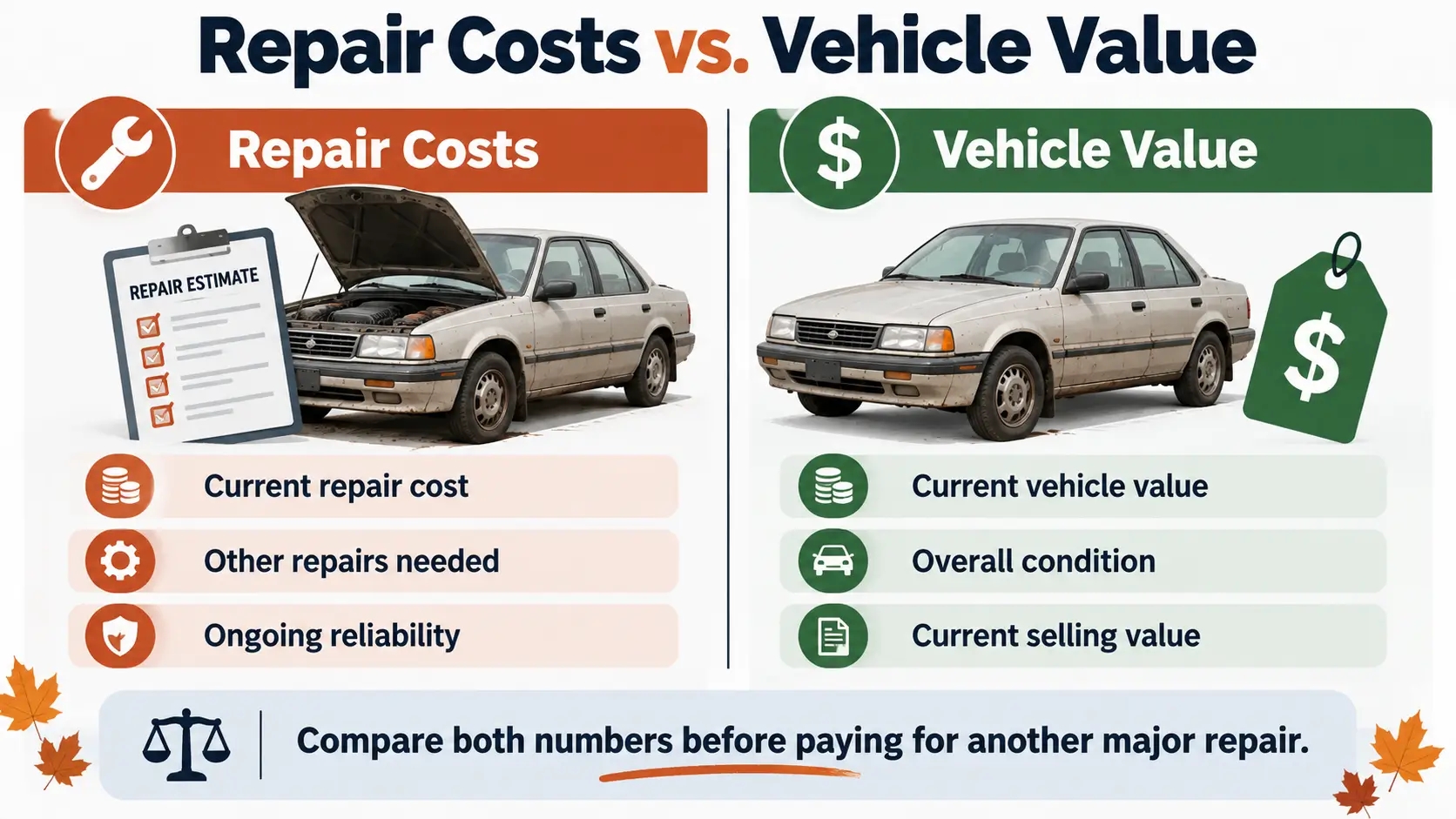
Quick takeaway: Comparing repair costs, ongoing ownership expenses, and the vehicle's current value can help determine whether repairing, keeping, or selling is the more practical option.

If you’re deciding whether to repair, recycle, or sell, our guide on scrapping an old car explains additional factors owners often consider before making a decision.

Verified customer vehicle reviews can also help owners understand how other sellers viewed the process.

No-Obligation Vehicle Review

Request Your Vehicle Quote

A vehicle quote gives you a practical way to compare your vehicle’s current value with the cost of keeping or repairing it. We review the details you provide and prepare a no-obligation estimate based on its condition and pickup requirements.

No-obligation estimate Condition-based review Free towing available

2026 Junk Car Value Guide: How Much Is It Worth? Read More »

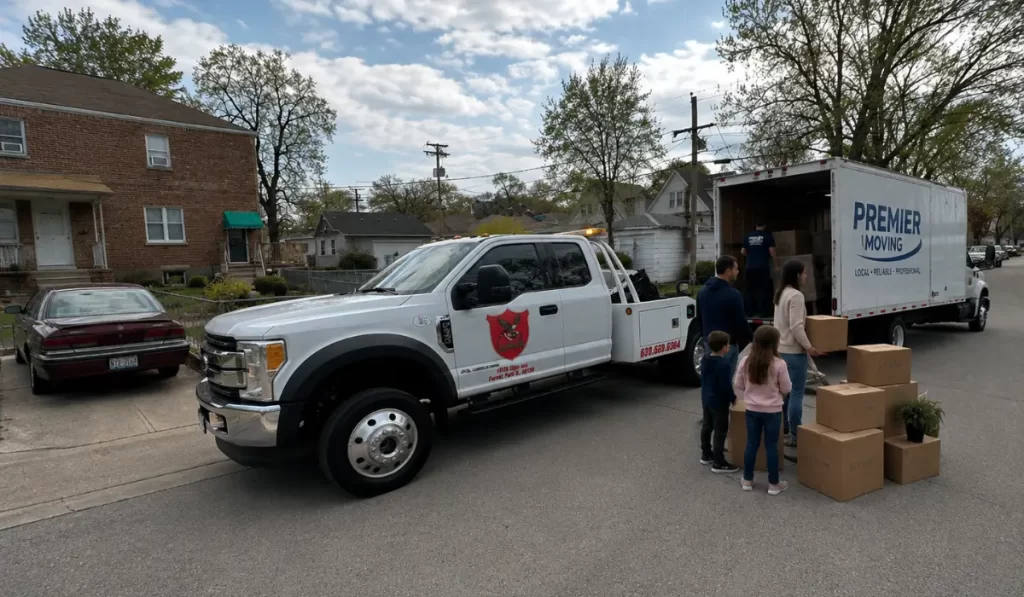
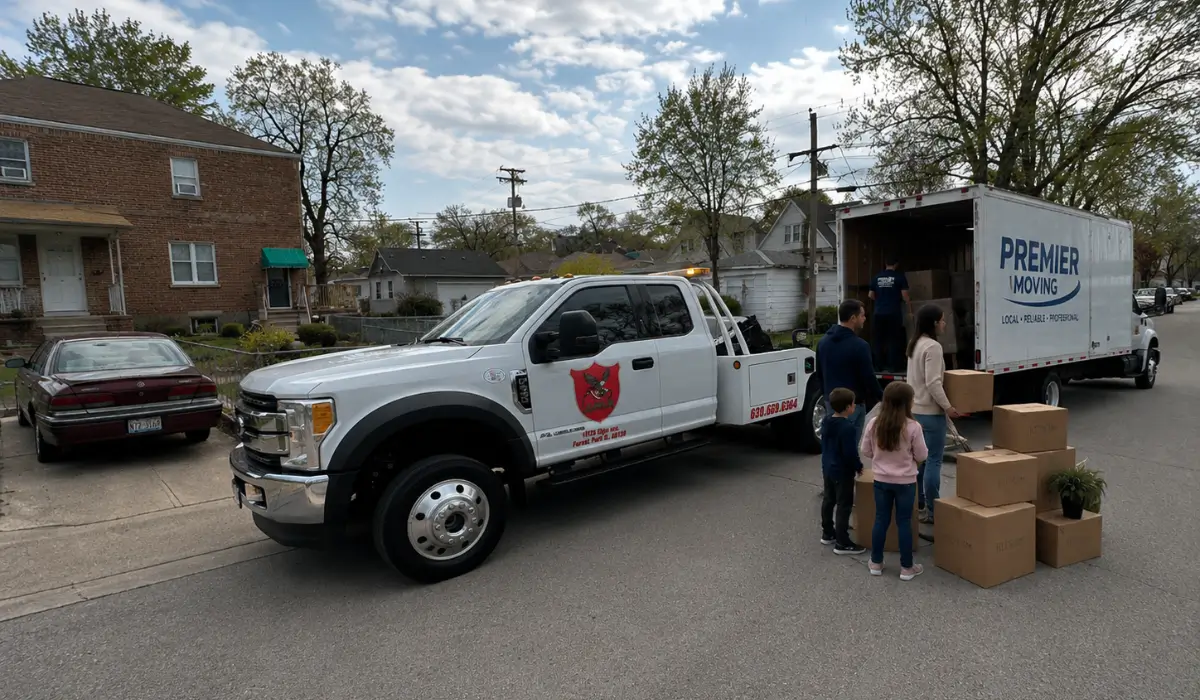
junk car before moving near family home as movers load belongings before relocation and departure

Junk Car Before Moving: Why It’s Smart to Get Rid of Your Old Vehicle First

junk car before moving near family home as movers load belongings before relocation and departure

Junk Car Before Moving: Why It’s Smart to Get Rid of Your Old Vehicle First

If you’re getting ready to move out of Forest Park, across town or across the country, bringing a non-working car with you is more hassle than it’s worth. junk car before moving can help you avoid extra relocation costs before your budget gets stretched.

Moving already comes with transportation costs, deposits, packing, and scheduling headaches. An older car can add even more expenses during a time when most people are trying to simplify their move and stay within budget.

Many Forest Park renters, homeowners, and college students discover that selling a car before relocating helps free up cash, reduce clutter, and avoid paying to move something they no longer need. Spring and summer are among the busiest moving seasons in the area, making early planning even more important.

Local residents often work with A+ Junk N Tow to remove an unwanted vehicle before moving and avoid paying to transport it to a new location.

The Real Cost of Moving a Junk Car

Moving a car that no longer runs is usually more expensive and time-consuming than people expect. What seems like a simple transportation issue often creates expenses that continue long after the moving truck leaves.

Towing or Shipping Costs for Broken-Down Vehicles

Most moving companies focus on furniture, boxes, and household belongings. A car that cannot be driven typically requires separate transportation arrangements, creating another expense during an already costly relocation.

Moving Option Cost Impact Potential Drawback
Local towing Additional expense Limited distance coverage
Vehicle shipping Higher cost Scheduling delays
Keep the vehicle Ongoing expenses Repairs and registration
Sell before moving Potential cash return Eliminates future costs

In simple terms, shipping or towing a car that does not run can cost hundreds or even thousands of dollars, while selling locally may give you cash back and remove the transportation expense.

We regularly speak with people who are surprised by how quickly transportation costs add up during a move. Between towing, storage, registration fees, and travel expenses, keeping an unused car can become one of the more expensive parts of relocation. Comparing those costs against a local cash offer often helps clarify the decision.

This simple comparison is one reason many Forest Park residents choose to sell first. When the cost of moving an older car approaches or exceeds its value, keeping it rarely makes financial sense.

Comparing moving car options often makes the decision clearer because transportation costs can exceed the value of an older car.

State Inspection or Registration in New State

A move across state lines can introduce new inspection, emissions, title, and registration requirements. A car that barely meets current standards may become even more difficult to keep once you arrive at your new destination.

Many owners do not think about these requirements until relocation is already complete. The Illinois Secretary of State provides information about Illinois title requirements that can help vehicle owners understand important documentation before relocating.

Time Spent Arranging Non-Functional Vehicle Transport

Imagine reaching the final week before your move with the truck reserved, boxes packed, and utilities scheduled. Then you realize the car sitting in the driveway still needs a transportation plan.

Coordinating towing companies, confirming pickup dates, and handling ownership paperwork can quickly become another source of pressure. Taking care of the car before relocation removes one more task from an already crowded schedule.

A move becomes easier when the vehicle decision is made early, before towing schedules, storage costs, or repair questions start competing for attention. A quick quote can help compare its value against towing, storage, repair, and transportation expenses.

What Most People Don't Realize Until It's Too Late

Some relocation problems only become obvious once plans are already underway. A car that has been sitting unused for months can suddenly become one of the most complicated parts of the move.

Movers Won't Tow or Drive Inoperable Vehicles

It is easy to assume the moving company will handle the car because it is part of the property being moved. In reality, most movers will not transport a vehicle that cannot be driven under its own power.

This often catches owners by surprise. By the time separate transportation becomes necessary, moving dates are approaching and available scheduling options may be limited.

You Can't Register an Emissions-Failed Car in Many States

A car that has already failed emissions testing or needs major repairs may face additional hurdles after relocation. Registration requirements vary by state, and some locations enforce strict compliance standards.

Spending money to transport a vehicle only to discover it cannot be registered without costly repairs is a surprise many owners wish they had avoided.

Selling a Junk Car After Moving Is Harder With Out-of-State Paperwork

Waiting until after the move sounds convenient, but it often creates new obstacles. Ownership records, title transfers, and registration requirements may become more difficult to manage once residency has been established elsewhere.

Additional challenges can include:

  • Delays in title verification
  • Ownership documentation issues
  • Transportation logistics
  • State-specific paperwork requirements
  • Extra scheduling demands

Local scrap car buyers are often easier to work with while the vehicle, title, and owner remain in the same area.

Owners comparing out-of-state car removal options often find it simpler to handle the sale before ownership records and paperwork cross state lines.

The harder part is often not the car itself. It is the added paperwork, timing pressure, and transportation cost that come with waiting too long. Our cash offers for vehicles help simplify that process before relocation begins.

Benefits of Junking It Before You Leave Forest Park

Choosing to deal with a junk car before moving often creates benefits that extend far beyond convenience.  The right decision can save money, reduce pressure, and make the entire transition easier to manage.

Local Buyer = Faster Sale

Time becomes increasingly valuable as moving day approaches. Working with a local buyer often means quicker scheduling, faster pickups, and fewer obstacles to overcome.

We purchase vehicles in nearly every condition, including damaged cars, older trucks, SUVs, totaled vehicles, and cars that no longer run. Drivers searching for sell my car for cash options usually want a straightforward way to remove a vehicle they no longer need.

Searches like relocate car sell usually point to the same concern: how to deal with a car before moving without creating more work.

Less to Worry About on Moving Day

Moving day goes smoother when fewer loose ends are left behind. An older car can create transportation concerns, repair decisions, registration questions, and storage problems all at once.

Removing that car before relocating means one less responsibility competing for your attention. Instead of arranging transportation for something that no longer runs, you can focus on settling into your new home.

This is especially true for renters and college students working with limited budgets. Every dollar spent moving an unwanted vehicle is money that could go toward a U-Haul rental, fuel costs, deposits, or other relocation expenses.

Consider a college student moving into a new apartment before the semester begins. Removing an unused car beforehand can eliminate transportation expenses, reduce parking concerns, and free up money for move-in costs.

Consider a Forest Park homeowner preparing for an out-of-state move. An older car that has been sitting unused for months may not be worth the cost of transportation. Selling it before moving day can remove one more item from the relocation checklist and free up money for travel and moving expenses.

Situations similar to this are discussed in these non-running vehicle options, where owners faced difficult decisions about vehicles that were no longer practical to keep.

Extra Cash for Moving Expenses

Relocation expenses rarely stop with the truck rental. Fuel costs, security deposits, utility setup fees, temporary storage, and travel expenses can quickly stretch a budget.

An older car you no longer use can help offset some of those costs. Many owners are surprised to learn that even heavily damaged vehicles still have value because parts can be reused and materials can be recycled.

For some households, selling an older vehicle becomes part of a larger summer car cleanup plan that helps reduce clutter before moving into a new home.

The U.S. Environmental Protection Agency offers vehicle recycling guidance that explains how vehicle recycling helps recover materials while reducing waste. That remaining value is one reason many owners review cash offer expectations before finalizing their moving budget.

Once towing, registration, storage, and repair costs are clear, the decision becomes easier to price. Getting a local quote provides a practical number to weigh against transportation, storage, repair, and registration expenses.

Quick Checklist: Pre-Move Junk Car Selling in Forest Park

A little preparation can make the process much smoother. Completing a few simple tasks before pickup helps prevent delays and keeps your move on track.

Remove Plates and Personal Items

Start by checking the car carefully for anything you may have forgotten. Many owners find paperwork, garage remotes, toll transponders, tools, and personal belongings stored in compartments they rarely use.

Removing those items before pickup helps avoid unnecessary complications later.

Schedule Pickup 48–72 Hours Before Your Move

Waiting until the relocation date creates avoidable pressure. Scheduling vehicle removal a few days before relocation provides flexibility and leaves room for unexpected changes.

Our Illinois service locations make it easy to arrange vehicle pickup before your move begins.

Cancel Insurance Once Pickup Is Confirmed

Once ownership transfer and pickup are complete, contact your insurance provider and update your policy. This helps prevent paying for coverage on a car you no longer own.

After removal, many vehicles are dismantled for reusable parts and recyclable materials. These vehicle recycling benefits help explain why even damaged vehicles can still hold value.

Frequently Asked Questions

You may still have options, but title requirements depend on the car and available ownership records. The best step is discussing your situation before moving day so there is time to review what documentation may work.

Additional information is available in our junk car questions.

Same-day pickup may be available depending on scheduling and location. Planning ahead generally creates more flexibility, but our team can discuss options based on your timeline.

Leaving a car on private property without permission can create legal and financial problems. Property owners, landlords, and municipalities may arrange removal and pass the associated costs back to the owner.

Handling the car before relocating is usually the safer and more practical option.

Ready to Make a Decision?

Don’t drag your junk car into your next chapter. Forest Park movers, we’ll haul it away and put cash in your hand before the truck even arrives.

Junk Car Before Moving: Why It’s Smart to Get Rid of Your Old Vehicle First Read More »

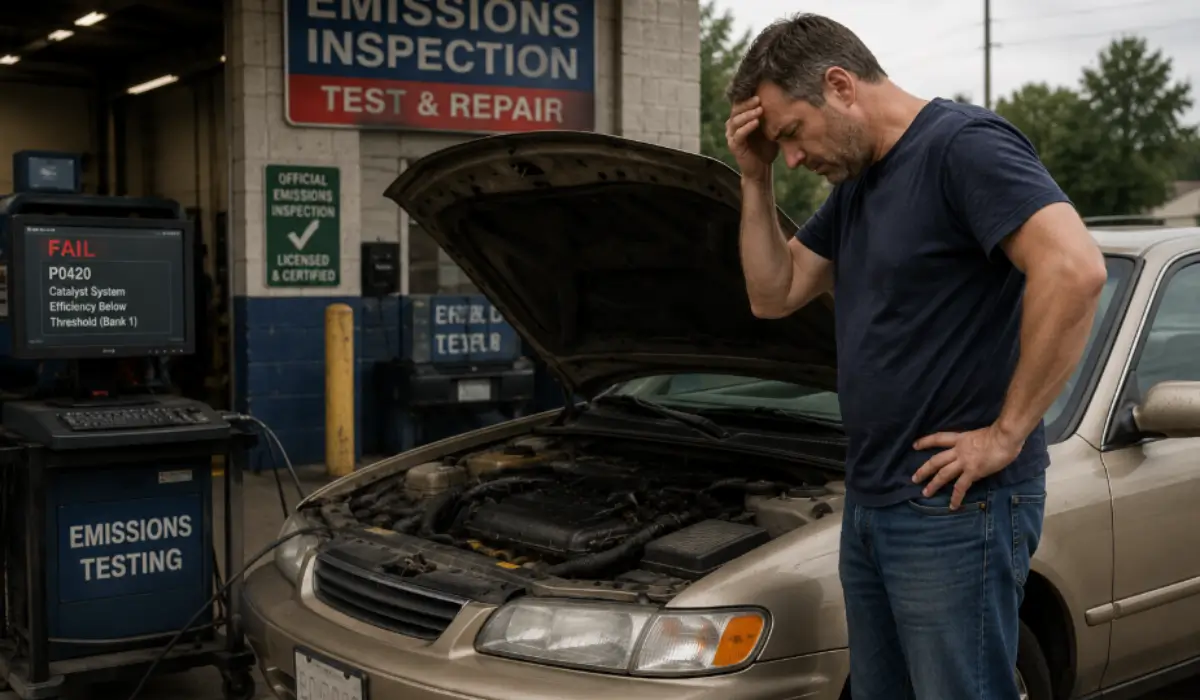
Car Failed Emissions inspection showing stressed driver beside older vehicle during Illinois emissions testing evaluation.

Why Your Car Failed Emissions—and What to Do Next

Car Failed Emissions inspection showing stressed driver beside older vehicle during Illinois emissions testing evaluation.

Why Your Car Failed Emissions—and What to Do Next

Car failed emissions issues often begin with a simple failed test but can quickly turn into an expensive repair-versus-value decision for Elmhurst drivers.

An emissions failure may be caused by a simple sensor issue — or it could point to deeper problems like catalytic converter damage, EVAP system leaks, or incomplete OBD-II readiness monitors.

Before spending thousands on repairs, it’s important to understand what failed, what Illinois requires next, and whether the vehicle is still worth keeping.

Most emissions repair articles only explain how to pass the test. They rarely answer the bigger financial question many drivers actually face:

“Is this car still worth fixing?”

This guide helps Elmhurst drivers understand:

  • Common emissions failures
  • Illinois testing and retesting rules
  • Registration risks
  • Repair-versus-replacement decisions
  • When selling the vehicle may make more financial sense

For drivers comparing their options, many begin with A+ Junk N Tow or review available Cash for Junk Cars options before committing to expensive repairs.

According to Illinois emissions testing trends, older high-mileage vehicles are more likely to fail due to catalytic converter wear, EVAP system leaks, and incomplete readiness monitors during retesting.

In Elmhurst and nearby DuPage County suburbs, repeat emissions failures are especially common during colder months when aging exhaust systems experience additional stress.

Common Reasons for Car Failed Emissions

Most emissions failures come from worn components that affect fuel burn and exhaust performance.

01
🧪

Faulty Oxygen Sensor

A bad oxygen sensor causes the engine to burn too much fuel, which increases emissions and lowers fuel efficiency. This is one of the most common reasons for an emission test failed car .

02

Worn-Out Spark Plugs Or Misfires

Misfires release unburned fuel into the exhaust system. Older Elmhurst vehicles often develop this problem after years of daily driving.

03

Leaky Gas Cap Or Exhaust

A loose gas cap or small exhaust leak can trigger a failed test even when the engine still runs well. Some failures are minor and inexpensive to repair.

04
🚘

Malfunctioning Catalytic Converter

Catalytic converter replacement is one of the most expensive emissions repairs. For many older vehicles, repair costs quickly exceed the vehicle’s value.

This is where the situation becomes a clear repair vs sell car decision.

What Illinois Emissions Testing Checks

Illinois emissions testing primarily evaluates the systems most commonly linked to a car failing emissions results:

  • OBD-II readiness monitors
  • Check engine light status
  • EVAP system performance
  • Catalytic converter efficiency
  • Exhaust emissions output

Even after repairs are completed, a vehicle may still fail if readiness monitors have not fully reset.

Why Readiness Monitors Matter

After battery replacement or emissions repairs, OBD-II monitors need enough driving cycles to complete system self-checks.

Many drivers fail retesting because monitors remain “not ready,” even when the original repair fixed the problem.

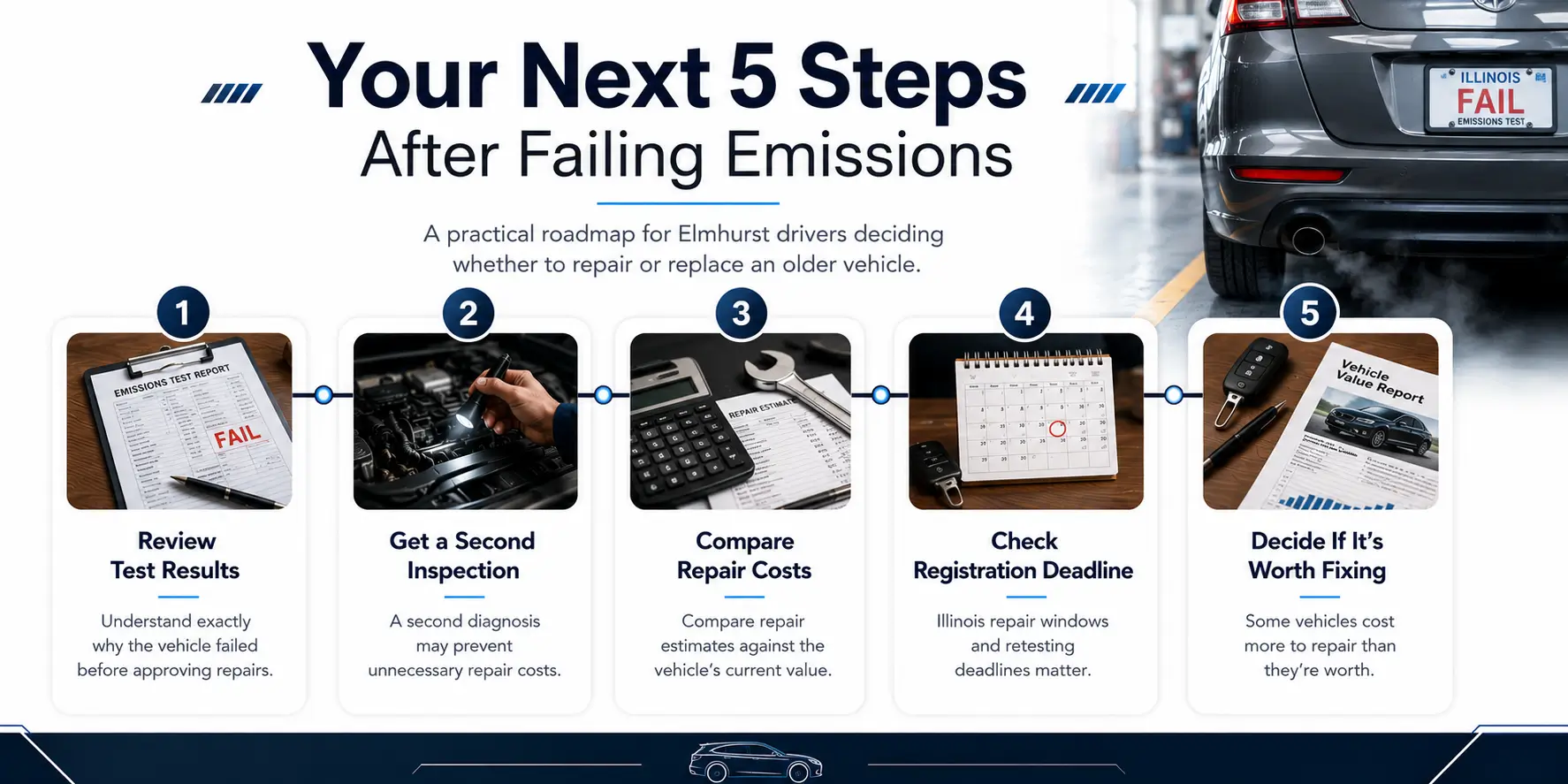
Timeline infographic showing the next 5 steps after a Car Failed Emissions result in Illinois, including reviewing test results, getting a second inspection, comparing repair costs, checking registration deadlines, and deciding whether the vehicle is worth fixing.
5 Steps After Failing an Emissions Test in Illinois

What to Do Immediately After a Failed Test

A failed emissions result does not always mean the vehicle is done, but your next decision affects both cost and legal compliance.

Get A Second Opinion

Some repair shops misdiagnose emissions problems and recommend unnecessary repairs. A second inspection can prevent wasted money.

Check If Your Car Qualifies For Waiver Or Retest

Illinois allows retesting and possible waivers under certain conditions. Repeated failures can also create additional repair and testing expenses.

Elmhurst drivers often visit nearby Illinois EPA testing stations near Addison and Naperville for retesting. Multiple visits can increase downtime and frustration.

You can review current requirements in the Illinois EPA emissions program.

Know Your Repair Window Per Illinois DMV

Illinois gives drivers a limited repair window before registration problems begin. Missing deadlines can create added stress and penalties.

You can review additional Illinois emissions requirements in the Illinois Legal Aid emissions guide.

Should You Fix It or Junk It?

This decision usually comes down to repair cost, vehicle age, and long-term reliability.

🛠️

Worth Fixing

  • Minor repairs
  • Low mileage
  • No repeat failures
  • No catalytic converter damage
  • Strong resale value
🚘

Consider Selling

  • Repairs exceed vehicle value
  • Multiple failed tests
  • Catalytic converter replacement needed
  • Registration deadline approaching
  • Check engine light keeps returning
Situation Recommended Action
Low repair cost Fix and retest
Repairs equal vehicle value Consider selling
Repairs exceed vehicle value Junk or sell for cash

Repair Estimate Vs. Vehicle Value

Small repairs may still make financial sense. Larger repairs often create a cycle of repeated testing and added expenses.

Older Cars Often Fail Due To Age Alone

Many older suburban vehicles in Elmhurst develop recurring emissions issues after years of wear. Oxygen sensors, exhaust leaks, and catalytic converters often begin failing close together.

Signs Repairs May Keep Repeating

Local mechanics often notice the same pattern before repeat failures:

  • The check engine light returns weeks later
  • Readiness monitors fail to reset
  • Multiple emissions components begin failing together
  • New warning codes appear after earlier repairs

For vehicles with over 150,000 miles, a recurring car failed emissions issue is often part of a broader mechanical decline rather than a single isolated problem.

When It Makes More Sense To Junk For Cash

Before paying for another repair, ask whether the next repair is likely the last one or the start of a longer cycle.

  • One failed test + small repair = usually worth fixing
  • Multiple failed tests + older vehicle = repair costs usually keep growing
  • Catalytic converter replacement + high mileage = selling often makes more sense
  • Registration deadline approaching = delaying repairs increases legal risk

If your situation matches a failed emissions junk car, selling may become the smarter financial option. Many owners choose to sell my car for cash instead of continuing expensive repairs.

Some drivers also compare these situations to older cash for clunkers programs after repeated test failures.

You can compare similar local situations in Plainfield emissions failure cases, where repeated repairs eventually cost more than keeping the vehicle on the road.

How to Legally Junk a Car That Failed Emissions in Elmhurst

Junking a failed emissions vehicle is usually simpler than most owners expect.

Required Paperwork For Junking

You typically need:

  • Vehicle title
  • Valid ID
  • Basic vehicle information

You can confirm pickup availability in Elmhurst service areas.

What Happens To The Title

Once sold, the title transfers out of your name. This removes future ownership responsibility.

You can review the process in junk car buying process details.

How To Notify The State DMV

Some situations require additional DMV notification after the sale. Keeping your paperwork organized helps prevent ownership or registration issues later.

You can review common ownership transfer questions in the junk car FAQs guide before completing the process.

Getting the Most Value from an Emissions-Failed Car

Even vehicles that fail emissions testing may still hold value.

Selling For Parts (If Legal)

Selling parts individually can increase value, but most owners prefer a faster option because part removal takes time and storage space.

Recycle Metal And Tires

Most failed vehicles still contain recyclable materials and reusable components.

The junk car recycling process explains how vehicles are dismantled and reused after removal.

Junk Car Buyers That Specialize In Failed Test Vehicles

Experienced buyers often recognize whether the problem is temporary or part of a larger mechanical decline.

We buy vehicles in any condition and handle:

  • Pickup scheduling
  • Required paperwork
  • Same-day payment
  • Title transfer assistance

Hidden damage can also lead to a smog test failed result. Issues like flood-damaged vehicle problems often create long-term electrical and emissions issues.

FAQ

You may drive temporarily, but repairs must usually be completed within the allowed state timeframe.

Illinois gives drivers a repair window before registration penalties apply.

Yes. Even a failed emissions junk car still has value based on parts, scrap metal, and overall condition.

What Should You Do Next?

Failed emissions in Elmhurst? Don’t spend thousands just to pass a test. We’ll help you junk your car legally, safely, and with same-day pickup. You can also review local customer reviews before deciding what to do next.

Why Your Car Failed Emissions—and What to Do Next Read More »

Car That Doesn’t Run getting removed from snowy suburban parking lot after winter mechanical vehicle failure.

Can You Sell a Car That Doesn’t Run? Yes, Here’s How

Car That Doesn’t Run getting removed from snowy suburban parking lot after winter mechanical vehicle failure.

Can You Sell a Car That Doesn’t Run? Yes, Here’s How

A car that won’t start doesn’t mean you’re stuck. In Bolingbrook, a car that doesn’t run can still have value because local buyers pay for non-running vehicles, no matter how long it’s been sitting.  Here’s exactly how to sell your dead car and make the most of it.

For cars sitting in a garage all winter or stuck behind another vehicle in a driveway, this guide helps you understand your options quickly. local junk car service from A+ Junk N Tow helps Bolingbrook drivers handle these situations every day.

Quick Answer

Can You Sell a Car That Doesn’t Run?

Yes. Most non-running vehicles still have value based on:

  • Recyclable metal
  • Usable parts
  • Catalytic converters
  • Hybrid batteries
  • Vehicle demand

Why Buyers Still Want Non-Running Cars

Even when a vehicle will not start, we still buy it because the value comes from parts, materials, and demand, not just whether it runs.

Value Of Parts (Engine, Transmission, Electronics)

Engines, transmissions, and electronics often retain value even after failure. Many of these parts can be reused or rebuilt depending on their condition.

Most Bolingbrook family drivers we see assume a breakdown means zero value, but we evaluate each vehicle based on what can still be recovered. This is why sell non running car situations still lead to real cash offers.

Scrap Metal Weight

When a car sits unused in a suburban garage for months, its value often shifts toward scrap. Metal weight becomes a steady factor because recyclable materials still hold demand.

Component Why It Matters Value Impact
Steel frame Recyclable bulk Base value
Aluminum parts Lightweight metals Higher return
Copper wiring High demand material Adds value

Most vehicles are largely recyclable, which keeps demand strong even when they stop running, as explained in the EPA vehicle recycling basics.

Catalytic Converter And Tires

Some of the highest-value parts are easy to overlook. Catalytic converters contain valuable metals, while tires and rims can often be reused depending on their condition.

A car that doesn’t run may still contain valuable recyclable components that affect the final payout. Catalytic converters, aluminum wheels, electronics, and intact body panels can all increase demand from local buyers.

We buy many vehicles from multi-car households where one car sits unused for months. This is one reason we buy junk cars in almost any condition.

What Most Junk Car Buyers Won’t Tell You

Most people assume a non-drivable vehicle is worthless. That is not how professional junk car buyers evaluate vehicles in Bolingbrook.

The condition of the engine matters, but it is only one factor. Local buyers also look at:

  • catalytic converter demand
  • recyclable metal prices
  • usable electronics
  • tire condition
  • hybrid battery value
  • title status
  • towing access
  • seasonal scrap demand

A dead SUV with a clean Illinois title may still bring in more than a running sedan with severe rust damage.

This is where many sellers lose money. Some companies give low offers over the phone before seeing the vehicle condition, while others add towing fees later.

At A+ Junk N Tow, pricing is based on:

  1. Vehicle weight
  2. Reusable parts
  3. Current scrap market rates
  4. Ease of pickup
  5. Title availability
  6. Local demand in Bolingbrook and nearby suburbs

That creates a more accurate offer without hidden deductions.

Typical Non-Running Vehicle Value Ranges in Bolingbrook

Vehicle Type Common Condition Estimated Range
Compact Sedan Dead battery $150–$450
SUV Transmission failure $400–$1,200
Pickup Truck Engine damage $500–$1,500
Hybrid Vehicle Battery failure $600–$2,000
Flood-Damaged Vehicle Non-drivable $200–$900
Actual pricing depends on market demand, title status, and recyclable component value.

Illinois Rules That Affect Selling a Non-Running Car

Illinois requires proof of ownership before most junk vehicles can be sold legally.

Important things Bolingbrook drivers should know:

  • Missing titles may delay pickup
  • Salvage titles can still qualify for sale
  • License plates should usually be removed before towing
  • Vehicles abandoned on private property may require additional paperwork

Many sellers wait too long because they assume paperwork problems make the car unsellable. In reality, most title situations can still be resolved.

Common Causes Why a Car Stops Running

In many Bolingbrook neighborhoods, cars stop running after long periods of sitting, especially during winter. Cold starts, short trips, and inactivity all contribute to failure.

Dead Battery Or Alternator

A cold winter can drain a battery quickly, especially when a second or third family vehicle is rarely used. This is one of the most common reasons a car will not start.

Signs include clicking sounds, no dashboard lights, or slow cranking. A car battery dead situation is common after freezing temperatures.

Even in this condition, we still buy the vehicle because the rest of the car may still hold value.

Transmission Failure

A transmission issue can stop a car from moving even when the engine works. This often builds over time before complete failure.

This is where most people get stuck because they try to figure it out alone. Repair costs can become higher than the vehicle’s remaining value. We still purchase these vehicles since parts and materials remain valuable.

This breakdown of selling a non running car shows how similar cases are handled nearby.

Engine Lock-Up

When an engine seizes, the car will not start at all. This usually happens due to overheating or lack of maintenance.

Even with major damage like this, we evaluate usable parts and scrap value. This is why sell my junk car for cash is still a realistic option.

Example scenario: A Bolingbrook family SUV that would not start after winter could receive around $450, depending on condition, access, and scrap value.

Electrical Or Computer Failure

Modern vehicles depend on electronics, and even a small issue can prevent the car from starting. These problems are often difficult and expensive to fix.

We handle these situations regularly for families with multiple vehicles where one car sits unused. Selling often becomes the simpler and more practical choice.

Drivers comparing pricing details can also review these cash for cars offers to understand how condition and vehicle type affect payouts.

A Common Situation We See in Bolingbrook

One local family had a minivan sitting behind their garage after the transmission failed during winter.

They planned to repair it but kept delaying the decision because towing seemed complicated.

By spring:

  • the battery was dead
  • tires had sunk into the driveway
  • rodents damaged interior wiring

The vehicle still qualified for pickup because recyclable metals and drivetrain components retained value.

Situations like this are common throughout suburban neighborhoods where unused vehicles sit for long periods.

Other Conditions That Still Qualify for Sale

Many Bolingbrook drivers assume only older scrap vehicles qualify for pickup.

In reality, buyers also purchase:

  • flood-damaged vehicles
  • insurance total-loss vehicles
  • failed emissions vehicles
  • hybrids with dead battery packs
  • salvage-title vehicles
  • rodent-damaged wiring vehicles
  • long-term parked vehicles with rust or brake seizure

Donation is another option some owners consider, but selling usually provides faster removal and immediate payment.

How to Sell a Car That Doesn’t Run in Bolingbrook

When a car won’t start and sits unused, selling it becomes much easier when handled step by step.

1

Know What You’re Selling (VIN, Condition)

Basic details like VIN, make, model, and condition help determine value quickly. Having this ready speeds up the process.

2

Disclose The Issue Upfront

Clear information about the problem helps avoid delays. Whether it is a dead battery or engine damage, honesty leads to faster offers.

3

Request Quotes From Local Junk Car Buyers

Working with a local buyer helps because they understand Bolingbrook driving patterns and common vehicle issues.

You can request a cash offer for junk cars or even compare a cash offer for broken car before deciding.

4

Schedule A Tow Or Pickup, Some Buyers Include It Free

A non-running vehicle does not need to be moved by you. We arrange junk car towing and handle tight garages, blocked driveways, and difficult access points.

Many non-running vehicles may fall between $150 and $1,200 , depending on weight, usable parts, and current scrap demand. Larger vehicles or those with valuable components may fall on the higher end of that range.

Most people realize the issue is not just the car not starting. The real challenge is removing it easily and getting paid without complications.

We follow a simple process from quote to pickup so you do not have to guess the next step.

You can confirm availability in our Bolingbrook service areas before scheduling.

Tips to Maximize Your Offer

Getting the best value for a non-running vehicle usually does not require repairs. A few simple steps can help improve the final payout and make pickup easier.

Have Your Title Or Paperwork Ready

Having the title available helps speed up the process. If the title is missing, mention it early so buyers can explain possible alternatives under Illinois requirements.

Remove Custom Accessories

Aftermarket sound systems, upgraded rims, and custom accessories are not always included in pricing. Removing them beforehand allows you to keep their separate value.

Clean Out The Vehicle Before Pickup

Even when a car does not run, a clean interior makes inspection easier and helps avoid delays during towing. Remove:

  • personal belongings
  • garage remotes
  • paperwork
  • license plates when required

Mention If The Vehicle Has Been Sitting For Months

Vehicles parked long-term may develop:

  • brake seizure
  • tire flat spots
  • rust buildup
  • rodent wiring damage

Being upfront about the condition helps prevent surprises during pickup.

Most people think the hardest part is the repair bill. In reality, moving the vehicle is usually the bigger challenge once it has been sitting for a long time.

Drivers deciding whether to keep or recycle an older vehicle can also review this guide about scrapping an old car for additional local insight.

For pricing factors, the car value guide explains what influences vehicle value.

FAQ

No. Repairs often cost more than the increase in value, so selling it as-is is usually the better option.

We handle tight spaces, garages, and blocked vehicles regularly. You do not need to move the car yourself.

Our junk car FAQ page answers common concerns before deciding.

Yes. Vehicles with major damage are still purchased because parts and materials retain value.

Our junk car company overview explains how we handle these cases.

What Happens Next When You Decide to Sell

You can try to fix the vehicle yourself, which often leads to more time and cost. The simpler option is working with A+ Junk N Tow, where pickup and payment are handled in one process.

We handle this daily for Bolingbrook drivers with cars sitting unused in garages or driveways. You describe the vehicle, we make an offer, schedule pickup, and pay you on the spot.

Real customer review stories show how the process works in practice.

Fast Pickup Available
Ready to Sell Your Car That Doesn’t Run?
Whether it’s a dead battery or a major engine failure, you don’t have to push your car uphill. We’ll tow it and pay you. Bolingbrook drivers: schedule a no-hassle quote with A+ Junk N Tow.

You have two options from here. Try to figure it out on your own or let someone handle the process for you. For a simple next step, Bolingbrook junk car pickup gives you a clear way to request help, or call (708) 968-2505 .

Can You Sell a Car That Doesn’t Run? Yes, Here’s How Read More »

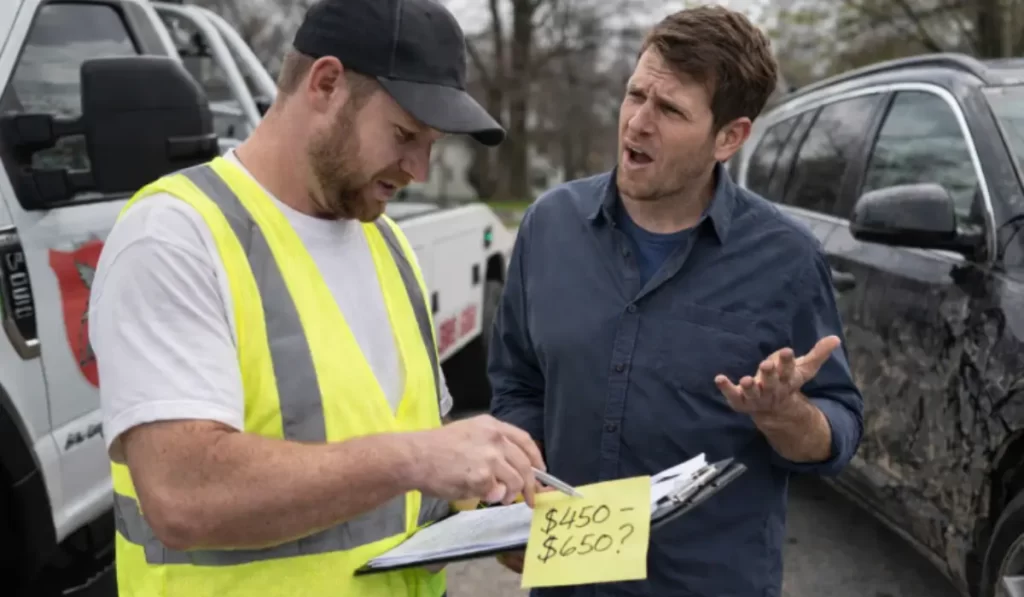
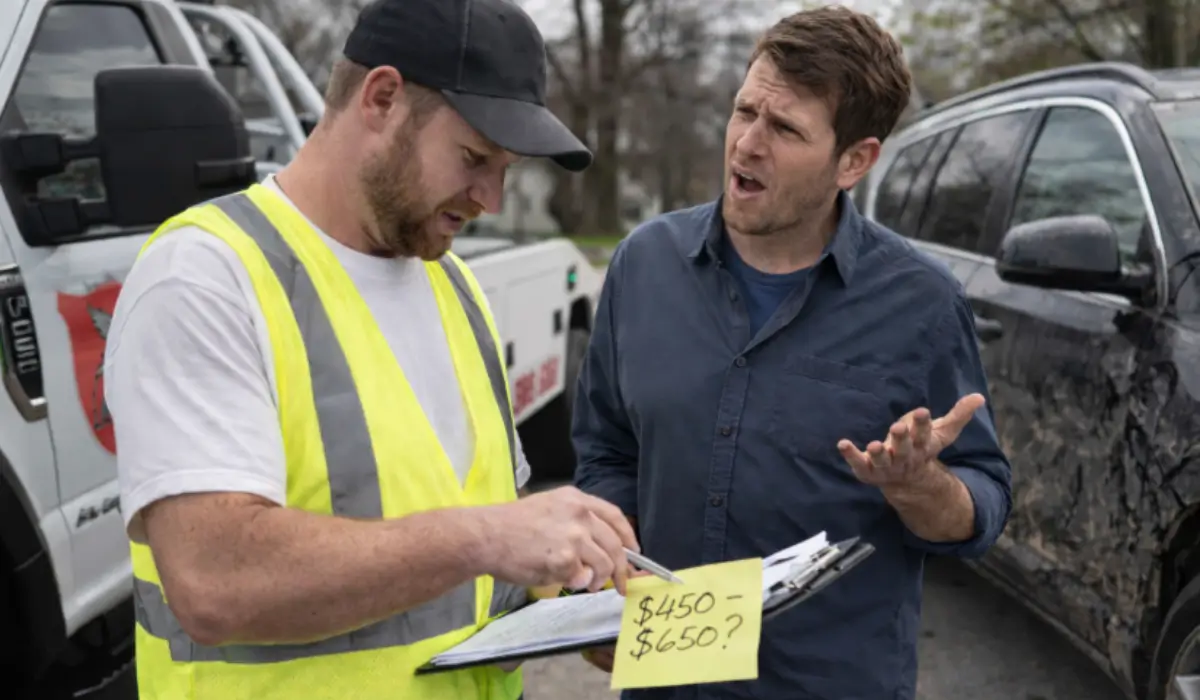
Cash for cars offers Bellwood buyer lowering offer during vehicle inspection after initial quote.

Cash for Cars Offers Bellwood: The Truth and How to Avoid Scams

Cash for cars offers Bellwood buyer lowering offer during vehicle inspection after initial quote.

Cash for Cars Offers Bellwood: The Truth and How to Avoid Scams

Why Cash for Cars Offers Bellwood Require Caution

Cash for Cars Offers in Bellwood can look simple—get a quote, schedule pickup, get paid. But many sellers quickly realize the process isn’t always that smooth. Some buyers change the price at pickup, delay payment, or leave important details unclear until the last minute.

If you’ve searched for junk car buyers near me, you’ve probably seen dozens of similar offers—especially on local classifieds, roadside signs, or Craigslist-style listings. The challenge isn’t finding a buyer. It’s knowing which ones will actually follow through.

Many sellers end up choosing established options like A+ Junk N Tow cash for junk cars service not because of flashy pricing, but because the process is explained clearly from the start—and that’s what prevents most problems.

What Are Cash for Cars Offers—and What Should You Expect?

Cash for Cars Offers are quotes from buyers who purchase vehicles in any condition, usually based on scrap value, usable parts, and current demand.

At a glance, the process looks simple:

  1. You request a quote
  2. You provide basic vehicle details
  3. You receive an offer
  4. Pickup is scheduled
  5. You get paid

What this means for you

The steps themselves aren’t complicated—but how each step is handled makes a big difference.

  • If the quote is clear → you know what to expect
  • If the quote is vague → it can change later
  • If the process is structured → everything moves smoothly

Most cash for cars scams don’t happen because of the price—they happen because the process wasn’t clear from the beginning.

Why Some Cash for Cars Offers Turn Into Problems

Most sellers assume problems happen at the beginning of the process. In reality, issues usually appear after the deal has already been agreed upon. This is especially common in Bellwood, where many buyers operate through informal listings.

Some buyers use a simple pattern to take advantage of this situation. They provide a strong quote upfront, keep details minimal, and then adjust the price when the car is ready for pickup. Understanding how to verify junk buyer processes early helps prevent this from happening.

The Most Common Cash for Cars Scams in Bellwood

In Bellwood, the most common issues involve buyers changing the agreed price at pickup, delaying payment, or using unclear terms to pressure sellers. The most frequent tactic is offering a high quote upfront and lowering it once the vehicle is ready to be removed.

Bait-and-switch pricing

This is the most common issue tied to Cash for Cars Offers. A buyer gives you a high quote initially, then lowers it when they arrive for pickup. This usually happens when you are already committed to the process.

Local scenario

A Bellwood seller responds to a Craigslist-style ad offering top cash for junk cars. The quote seems fair at first, but when the tow truck arrives, the buyer reduces the price significantly. The explanation often involves vague claims about weight or missing parts.

What this means for you

This tactic works because of timing rather than actual value. It is one of the most common lowball car offers strategies used in the local market. If pricing is not clearly explained before pickup, it is likely to change.

Unreliable pickups

Some buyers fail to follow through with scheduled pickups. They may arrive late, reschedule multiple times, or not show up at all. This is common with informal or unverified buyers.

What this means for you

Even if it is not a scam, it still wastes your time and delays your ability to sell your vehicle. Reliable buyers treat scheduling as a commitment rather than a flexible estimate.

Unclear or delayed payment

Payment issues are another common problem sellers face. Some buyers offer checks, app payments, or delayed transfers instead of immediate payment. These methods introduce uncertainty into what should be a simple transaction.

According to the FTC scam prevention guidelines, delayed or reversible payments increase the risk in private transactions.

What this means for you

If payment is not immediate and clearly defined, the deal is not fully secure. A reliable transaction should be completed at the time of pickup without delays.

Title and ownership confusion

Paperwork is often overlooked, but it plays a critical role in protecting you. If ownership transfer is not handled correctly, you could still be tied to the vehicle after it is removed.

What this means for you

A legitimate honest car buyer will walk you through this process step by step. They will make sure all documentation is completed correctly before leaving.

Red Flags to Watch When Comparing Buyers

When reviewing junk car buyers near me, small details can reveal major risks. These warning signs often appear early in the process.

  • No written quote

A verbal offer can change at any time without accountability. A written quote provides clarity and sets expectations before pickup.

  • Pricing explained only at pickup

This is where most lowball car offers occur. If pricing details are only discussed after arrival, you are already at a disadvantage.

  • Pressure to decide quickly

Some buyers create urgency to limit your ability to compare options. This often leads to rushed decisions and poor outcomes.

  • No verified local presence

A legitimate buyer should have a clear and verifiable presence. You should be able to confirm reviews, business details, and service areas.

You can verify this by checking a Bellwood IL junk car service area to ensure the buyer actually operates locally.

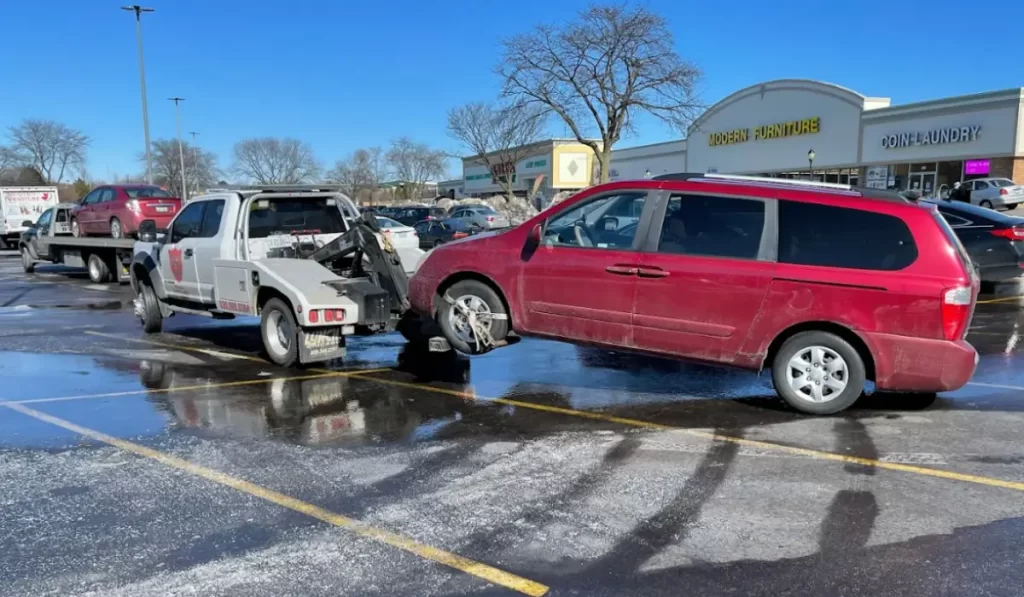
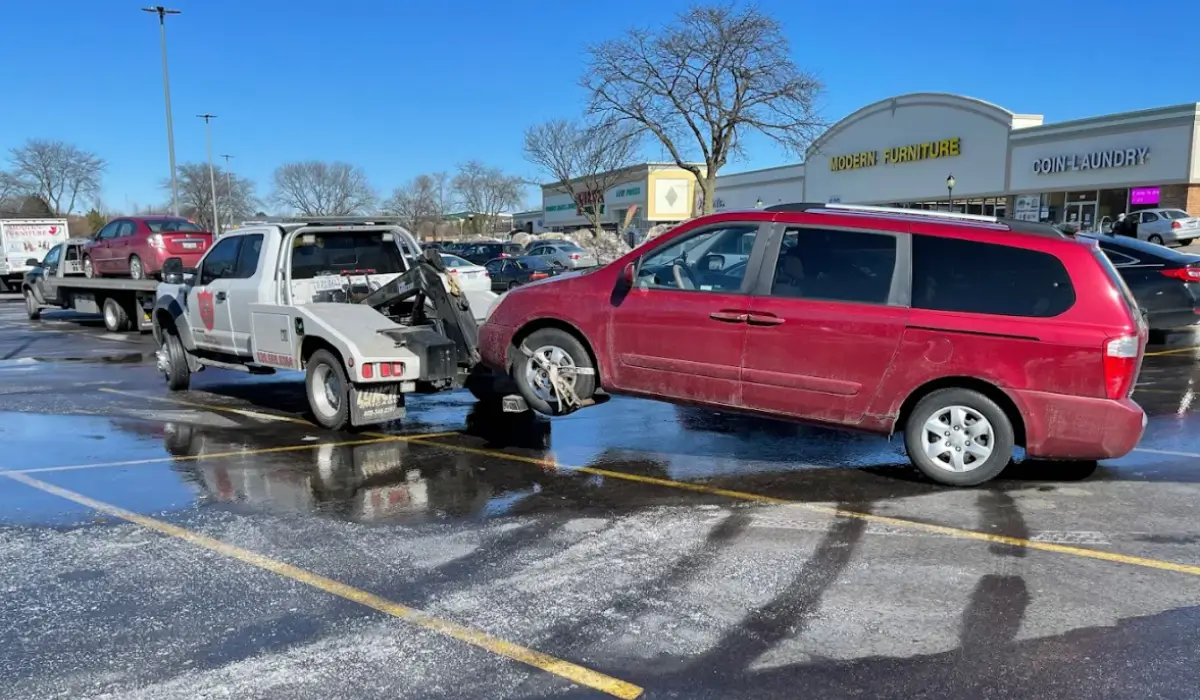
Tow truck removing a junk car in Bellwood, showing how cash for cars offers work with a professional local buyer
Reliable Junk Car Pickup in Bellwood – What a Legit Buyer Looks Like

How to Choose a Reliable Junk Car Buyer in Bellwood

Choosing the right buyer is about more than just price. It is about finding a process that is clear, consistent, and easy to follow.

Pay attention to how things are explained

A reliable buyer will clearly explain pricing, pickup details, and payment timing. If something feels unclear at this stage, it often becomes a bigger issue later.

Look for consistency

Buyers with structured systems tend to provide written quotes and maintain stable pricing. They also complete payment during pickup without unnecessary delays.

Many sellers prefer working with local junk car removal specialists because the process is predictable and clearly defined.

Choose clarity over high offers

A slightly lower but stable offer is often better than a higher one that changes later. Consistency reduces stress and leads to a better overall experience.

What a Legit Cash for Cars Deal Should Feel Like

A legitimate transaction should feel straightforward from beginning to end. You should not feel uncertain about any step of the process.

You understand the price upfront

The buyer explains how your car is valued before scheduling pickup. This eliminates confusion and sets clear expectations.

The offer stays the same

If your vehicle details are accurate, the price should not change. Stability is a key sign of a trustworthy process.

Payment happens immediately

Real cash for junk cars transactions are completed at the time of pickup. There should be no delays or follow-ups required.

Paperwork is handled properly

Ownership transfer should be completed correctly and clearly. This ensures you are no longer responsible for the vehicle.

The process feels simple

A good experience feels organized and predictable. There should be no confusion, delays, or unnecessary complications.

Legit vs Risky Buyers (Quick Comparison)

A legit junk car buyer provides a clear process, written pricing, and immediate payment, while a risky buyer relies on vague offers, last-minute changes, and unclear terms. The difference usually comes down to transparency before pickup and consistency during the transaction.

A quick side-by-side comparison to help you avoid pricing surprises.

Best Choice

✔ Legit Buyer

  • Offer: Written and fixed
  • Pricing: Explained upfront
  • Payment: Immediate on pickup
  • Process: Clear and documented
  • Reputation: Verified locally

✖ Risky Buyer

  • Offer: Verbal only
  • Pricing: Changes later
  • Payment: Delayed or uncertain
  • Process: Unpredictable steps
  • Reputation: Limited or unclear

Work with a buyer that keeps things clear from the start—no surprises at pickup.

What Happens After You Sell Your Junk Car?

Most vehicles go through a structured recycling process after pickup. Usable parts are removed, scrap metal is recycled, and remaining materials are handled safely.

You can learn more in this guide on what happens after junk car pickup. For additional context, the EPA recycling overview explains how materials are reused.

Does Mileage or Condition Affect Your Offer?

Yes, but not always in the way people expect. Buyers often prioritize weight, parts value, and market demand over mileage alone.

This guide on how mileage impacts junk car value explains the factors involved. Understanding these details helps you set realistic expectations.

Selling More Than One Car in Bellwood

If you have multiple vehicles, the process can be more efficient than handling each one separately. Many buyers offer combined pickup and pricing options.

This resource on selling multiple junk cars in Illinois explains how bulk removal works. It can save time and simplify scheduling.

FAQ – Cash for Cars Offers in Bellwood

Are all cash for cars offers legit?
No, some rely on price changes later in the process. Always verify the buyer’s process before committing.
Why are some offers higher?
Higher quotes are often adjusted during pickup. The initial number does not always reflect the final payment.
How do I find a reliable buyer?
Look for clear pricing, written quotes, and consistent reviews. These factors indicate a more stable process.
Where can I learn more about selling a junk car?
For more details, visit the junk car selling FAQ page .

Don’t Let a Bad Offer Cost You

The best Cash for Cars Offers are not always the highest. They are the ones that remain consistent from start to finish.

In Bellwood’s busy market, choosing clarity over hype helps you avoid the most common mistakes. A reliable process makes the entire experience easier and more predictable.

Working with any buyer becomes safer when these verification steps guide the decision process.

A structured process removes uncertainty from vehicle sales. A+ Junk N Tow operates as a licensed and insured local company serving Bellwood with a system designed to prevent common pricing issues.

Get a Clear, Upfront Offer

If you want a straightforward experience, start by requesting a free online junk car quote. This allows you to understand the process before committing.

Reviewing a cash for junk cars pricing process can also help you understand how offers are structured.

No hidden fees • Fast pickup • Clear pricing

A+ Junk N Tow Offers Services As Follows:

Especially Selected Articles:

Cash for Cars Offers Bellwood: The Truth and How to Avoid Scams Read More »

Person using a tablet to inspect a Junk Car in 2026 after front-end collision damage

How to Get the Most Cash for Your Junk Car in 2026

Person using a tablet to inspect a Junk Car in 2026 after front-end collision damage

How to Get the Most Cash for Your Junk Car in 2026

Key Factors Affecting Junk Car in 2026 Value and Cash Offers

Junk Car in 2026 pricing continues to shift across Illinois, especially in suburbs like LaGrange where recycling demand and transportation access influence local offers. Prices change each year as regional scrap metal markets fluctuate. 

Timing, buyer comparisons, and vehicle preparation often determine how much money a seller receives. Many residents review offers from A+ Junk N Tow or compare available Cash for Junk Cars services before making a decision. Sellers who understand these pricing factors often receive significantly higher payouts than those who accept the first offer available.

What Determines Your Junk Car’s Value in 2026?

Several factors influence how buyers calculate the payout, including metal markets, vehicle size, condition, and local demand. In suburbs like LaGrange, proximity to recycling centers and regional scrap activity can also influence pricing.

The following factors explain how buyers determine value in the current market.

Scrap Metal Prices (Steel, Aluminum, Copper)

Metal pricing drives the baseline offer for any Junk Car in 2026. Steel makes up most of the vehicle’s weight, while aluminum components and copper wiring can increase the total payout.

Scrap yards closely monitor regional mill demand and export activity. When recycling facilities increase purchasing, offers often rise quickly. In many Midwest markets, scrap steel prices can fluctuate weekly depending on mill production levels and global export demand.

Key metals that influence pricing include:

  • Steel – the largest portion of vehicle weight
  • Aluminum – commonly found in engines and body panels
  • Copper – present in wiring and electronic systems

Communities in the western suburbs sit close to recycling networks serving DuPage and Will counties. When industrial demand increases, recycling yards compete for vehicles, which often raises the overall junk car value in suburban markets.

Buyers frequently rely on a scrap car price guide to estimate value based on vehicle weight and current metal pricing.

Even small shifts in steel or copper markets can influence payouts within days. Sellers who want to see how current market conditions affect their vehicle can request an estimate before accepting an offer.

Vehicle Make, Model, And Weight

Vehicle size plays a major role in determining the offer because larger trucks and SUVs contain more recoverable metal, which increases their overall recycling value.

Buyers usually evaluate several characteristics when reviewing a vehicle:

  • Vehicle make and model
  • Overall vehicle weight
  • Presence of valuable components

Certain models also contain parts that recyclers actively seek. Catalytic converters and electronic modules can influence the internal car appraisal junk process used by salvage buyers.

Regional demand also affects resale potential. In suburban markets near Chicago, some vehicles remain valuable to dismantlers because parts are still needed within nearby repair networks.

Condition And Completeness (Tires, Battery, Catalytic Converter)

Condition matters, but completeness often matters more. A scrap vehicle in 2026 that still includes its catalytic converter, battery, and wheels will usually receive a stronger offer.

During the evaluation process, buyers review several components:

  • Catalytic converter
  • Battery
  • Tires and wheels
  • Major engine components

These parts contain recyclable metals or reusable materials that increase the vehicle’s overall value. Vehicle recycling plays a major role in recovering steel, aluminum, and other materials used in manufacturing, as outlined by the U.S. Environmental Protection Agency’s recycling overview.

During the car appraisal junk review, buyers check whether these components remain intact. Removing parts before requesting a quote often lowers the final payout.

Even vehicles with rust or mechanical damage can still retain solid scrap value when major components remain installed.

Market Demand In Lagrange And Nearby Regions

Local demand strongly influences pricing in the recycling industry. Areas such as LaGrange often generate stronger offers because buyers operate close to recycling facilities and major transportation routes.

The proximity to Chicago-area processing centers allows companies to reduce transportation costs, which can increase the overall junk car value offered to sellers.

Local market conditions that influence pricing include:

  • Distance to recycling facilities
  • Regional scrap metal demand
  • Competition among local buyers

Many residents comparing offers notice stronger payouts when they sell my junk car for cash through local buyers rather than distant national services.

Together, these factors determine how buyers calculate the payout for vehicles entering the recycling market in suburban communities near Chicago.

Key Factors That Determine Junk Car in 2026 Value

Small steps can make a noticeable difference in how buyers evaluate a vehicle. Proper preparation and accurate details often lead to stronger offers.

01

Include The Battery, Wheels, And Converter

Leaving the vehicle complete is one of the easiest ways to improve the price of a Junk Car in 2026. Batteries, wheels, and catalytic converters contain materials that recyclers can recover and reuse.

Most buyers rely on a scrap car price guide when calculating payouts. These components are usually included in those estimates, so removing them beforehand often reduces the final quote.

Keeping these parts installed provides several benefits:

  • Catalytic converter contains platinum and palladium
  • Battery can be recycled for lead and materials
  • Wheels and tires may be reused or recycled

A complete vehicle also allows faster processing at the recycling facility.

02

Provide Ownership Paperwork If Available

Documentation can make the sale faster and smoother. While some buyers allow owners to sell junk car without title, providing paperwork often simplifies the process.

  • Faster transaction without delays
  • Less need for verification
  • May support stronger offers

03

Prep The Car For Easy Access Or Pickup

Accessibility also influences vehicle value. Tow operators prefer vehicles that are easy to reach because difficult pickups increase labor time and equipment costs.

Winter conditions around Bolingbrook and nearby suburbs sometimes create delays due to snow and ice restrictions. Clearing a path to the vehicle helps towing crews complete the pickup quickly.

Simple preparation steps include:

  • Park in an open, accessible area
  • Clear snow, debris, or obstacles
  • Keep keys or vehicle details ready

Preparation often helps sellers who want to sell my junk car for cash receive stronger offers from local buyers.

Tow truck picking up a Junk Car in 2026 from a residential street
Tow Truck Picking Up a Junk Car in 2026 in a Residential Area

Regional recycling demand changes faster than many sellers expect. LaGrange drivers reviewing offers can compare current payouts before market adjustments affect vehicle pricing again.

Best Times of Year to Sell a Junk Car

Timing can influence how much buyers are willing to pay. Market demand and seasonal activity often affect how quickly recycling yards purchase vehicles and adjust their offers.

Scrap Yard Demand By Season

Seasonal demand can change how recycling yards manage vehicle intake. A Junk Car in 2026 may receive a stronger offer during periods when buyers actively seek additional inventory.

Tow companies and salvage buyers often see shifts in supply throughout the year. When supply drops, buyers may increase offers to maintain steady processing levels.

Why Spring And Early Summer Often Pay More

Spring and early summer frequently create favorable conditions for sellers. Increased economic activity during these months can lead to stronger demand across recycling and salvage markets.

Many vehicle owners notice that offers tend to rise when buyers compete to secure vehicles for dismantling and recycling operations. For that reason, this period is often considered the best time to sell car for many sellers.

When Holiday Demand Affects Pricing

Holiday travel can temporarily affect recycling activity. As travel increases, more vehicles may enter the salvage market due to mechanical failures or accidents.

Recycling yards sometimes adjust purchasing levels during these periods to manage supply. Observing best time to sell car patterns throughout the year can help sellers identify favorable selling opportunities.

Get Multiple Quotes — But Do It Fast

Comparing offers can significantly affect how much you receive for a vehicle entering the recycling market. Because pricing can change quickly, gathering several quotes within a short period often helps sellers secure stronger payouts.

Time-Sensitive Offers Based On Metal Pricing

Scrap markets move quickly, and quotes can change within days as metal prices fluctuate. Buyers adjust their offers frequently to reflect shifts in recycling demand and material value.

Many companies update their cash for junk cars 2026 payouts regularly, which is why timing matters when requesting quotes.

When collecting estimates, it helps to:

  • Request quotes within the same day or two
  • Compare multiple buyers before accepting an offer
  • Confirm that the quote reflects current market pricing

Some residents begin by requesting an estimate before comparing additional quotes from other buyers.

Avoiding Quote Baiting Scams

Some buyers advertise high prices online but reduce the offer during pickup. That situation often occurs when sellers provide incomplete information.

Providing accurate details during the car appraisal junk stage helps buyers deliver reliable quotes. Transparency reduces the risk of price changes later in the transaction.

Comparing Buyers: Local Vs National

Not all buyers evaluate vehicles the same way. Local companies sometimes provide stronger offers because they operate closer to recycling facilities and transportation routes.

Shorter transport distances allow these buyers to process vehicles more efficiently, which can translate into better payouts.

Sellers who want to sell junk car without title often prefer local buyers because they may offer:

  • Faster pickup scheduling
  • Simpler paperwork requirements
  • More flexible vehicle condition acceptance

Residents searching for current pricing can review available Cash for Junk Cars services in the region before choosing the buyer that offers the best value.

Top Mistakes That Lower Your Junk Car’s Value

Small decisions during the selling process can affect the final offer. Avoiding common mistakes helps protect your vehicle’s value in the recycling market.

MISTAKE #1

Removing Parts Before the Quote

Removing components before requesting a quote often reduces the value of a Junk Car in 2026. Buyers typically expect the vehicle to include its main parts when calculating an initial offer.

When important components are missing, recyclers must adjust their pricing because the vehicle contains fewer recoverable materials.

Common parts that influence the offer include:

  • Catalytic converter
  • Battery
  • Wheels and tires
  • Major engine components

Keeping these items installed allows buyers to evaluate the vehicle more accurately and provide a stronger quote.

MISTAKE #2

Hiding Damage Or Misrepresenting Condition

Providing accurate information helps buyers deliver reliable pricing. When sellers leave out details about damage or missing parts during the car appraisal junk review, the offer may change after inspection.

Clear communication helps prevent unexpected price adjustments. It also allows the pickup process to move forward without delays.

For the most accurate quote, sellers should mention:

  • Visible body damage
  • Mechanical issues
  • Missing components
  • Non-running condition

Honest descriptions help buyers calculate realistic offers from the beginning.

MISTAKE #3

Delaying Sale During Market Dips

Waiting too long can sometimes reduce the final payout. Scrap markets fluctuate throughout the year, and the value of a Junk Car in 2026 may drop if metal prices decline.

Monitoring market conditions and requesting quotes when demand is stable often helps sellers secure better offers.

Acting quickly after receiving a competitive quote can help prevent price changes caused by shifts in recycling demand or scrap metal markets.

Final Tips to Get the Most Cash for Your Junk Car in 2026

Selling a vehicle for recycling requires timing, preparation, and careful comparison of buyers. Market conditions, vehicle condition, and seasonal demand all influence how much you receive. Owners who keep their vehicles complete, provide accurate information, and request multiple quotes often secure stronger payouts. 

Monitoring recycling market activity can also help sellers avoid lower offers during slower periods. Before accepting an offer, it helps to review current pricing and compare reputable buyers in your area. 

Many sellers choose to request a quick estimate from A+ Junk N Tow or review available Cash for Junk Cars services to see the latest offers and maximize the value of their vehicle.

FAQ Common Questions About Selling a Junk Car in 2026

What’s The Average Junk Car Payout In Lagrange?
The payout depends on several factors, including vehicle weight, condition, and current scrap metal prices. In many cases, smaller vehicles generate a few hundred dollars, while larger trucks and SUVs may produce higher returns. To see the current value based on market conditions, sellers can request a FREE online quote.
Does Rust Lower My Offer?
Rust can affect value if it significantly reduces structural metal weight. However, most vehicles still retain scrap value because metal remains recyclable.
Should I Remove The Catalytic Converter To Sell Separately?
Removing the catalytic converter usually lowers the overall offer. Buyers often include catalytic converters when calculating the vehicle’s value because they contain recyclable metals. Keeping the converter installed typically results in a stronger payout.
GET YOUR OFFER

Junk car values shift quickly, yet the timing still belongs to you.

LaGrange drivers can contact A+ Junk N Tow for a clear quote and review current payouts today.

A+ Junk N Tow Offers Services As Follows:

Especially Selected Articles:

How to Get the Most Cash for Your Junk Car in 2026 Read More »

Tow truck delivering a vehicle to a licensed scrap yard, showing what happens to your junk car after it’s towed away in Forest Park.

What Happens to Your Junk Car After It’s Towed Away?

Tow truck delivering a vehicle to a licensed scrap yard, showing what happens to your junk car after it’s towed away in Forest Park.

What Happens to Your Junk Car After It’s Towed Away?

Recycling and Processing: What Happens to Your Junk Car After Tow

You hand over the keys. The tow truck pulls away. What happens to your junk car after it’s towed away is more than most people realize. A+ Junk N Tow handles each vehicle in Forest Park with safety, precision, and full compliance. 

Once the car arrives at a licensed facility, trained teams drain all fluids, remove valuable parts, and sort recyclable metals like steel and copper. Every step follows Illinois environmental guidelines. Nothing is left to chance. Through our Cash for junk cars service, that old vehicle becomes part of a responsible and resourceful recycling process.

Don’t let your old car sit and rust. Forest Park drivers can turn that junk into quick, safe cash today.

➡️ Start your hassle-free pickup with licensed professionals who handle every detail the right way.

Step-by-Step: What Happens to Your Junk Car After Tow

The journey doesn’t end when your vehicle is towed away. Here’s a breakdown of what happens to junk cars once your junk car arrives at a licensed scrap yard.

1

Transport To A Licensed Scrap Yard

After pickup, the vehicle is brought to a licensed scrap yard in Forest Park or a nearby suburb. These facilities are approved under Illinois law to process end-of-life vehicles. Location plays a role here—yards in DuPage and Will Counties must meet stricter environmental guidelines. Once on-site, your junk car is secured and queued for dismantling.

For vehicles considered abandoned or left unattended, read about the legal steps involved in selling one in Illinois: Legally Sell Abandoned Car in Illinois

2

Inspection And Inventory Of Usable Parts

Technicians conduct a detailed inspection once the vehicle arrives. Components are reviewed for resale or reuse based on condition and market demand. Even non-running cars can hold value, especially in Forest Park where secondhand parts are in high demand. This stage plays a key role in what happens to your junk car after pickup.

Commonly inventoried parts include:

  • Starters and alternators
  • Window motors
  • Engine components
  • Electrical systems

This assessment directly influences how much of the vehicle will be recycled or repurposed.

3

Fluids And Hazardous Materials Are Drained

Before anything else happens, the vehicle is safely drained of all fluids:

  • Engine oil
  • Brake fluid
  • Coolant
  • Transmission fluid
  • Remaining fuel

Each substance is classified as hazardous and must be handled according to EPA and state protocols. A+ Junk N Tow ensures this is completed by certified handlers to meet environmental safety standards.

4

Catalytic Converter, Battery, And Tires Removed

Before crushing begins, three key components are removed:

  • Catalytic converter: Contains precious metals like platinum and palladium, making it one of the most valuable parts.
  • Battery: Removed and sent for chemical-safe recycling or reuse.
  • Tires: Evaluated for tread life. If usable, they’re resold or retreaded. If not, they’re disposed of through specialty recyclers.

This part of the junkyard process recovers maximum value from your vehicle while minimizing waste and pollution.

Recycling the Metal and Materials

Once a junk car is stripped down, its raw materials take on a new life. The recycling stage focuses on recovering valuable metals and sending them back into the manufacturing economy.

Steel, Aluminum, And Copper Recovery

Once fluids and key components are removed, the remaining vehicle shell is crushed and dismantled. Metals are separated using industrial equipment:

  • Steel from the frame and body
  • Aluminum from engine parts and wheels
  • Copper from electrical wiring and radiators

These materials are then shipped to regional recycling facilities, including large-scale smelters near Chicago. This stage transforms your junk car into usable raw resources.

Why Junk Car Metal Still Has Value

Damaged or totaled vehicles still contain valuable materials. Recycling steel, for example, uses far less energy than producing new steel from raw ore. On average, a single junk car can yield:

  • Over 2,500 pounds of recyclable metal
  • Reduced greenhouse gas emissions
  • Lower demand on mining operations

This is why junk car pickup remains a service that benefits both sellers and the environment.

Where That Scrap Ends Up (Construction, Manufacturing)

Recycled metals from junk vehicles go back into production and manufacturing. Your scrapped car could be repurposed into:

  • Structural beams for new buildings
  • Home appliances like refrigerators or washers
  • Machinery and industrial tools
  • Components for new vehicles

Each junk car removed in Forest Park becomes part of a larger materials cycle, supplying industries throughout Illinois and the greater Midwest.

Stacked crushed vehicles at a licensed scrap yard showing what happens to your junk car after it’s towed away in Forest Park.
Stacked Junk Vehicles at a Licensed Forest Park Scrap Yard

Every step after junk car pickup matters.

Trusted buyers in Forest Park are ready to handle your vehicle the right way.

Resale Value and What Happens to Your Junk Car

Not everything in a junk car is scrap. Many components — even from broken vehicles — hold resale value and are reused locally or across the region.

Most Commonly Salvaged Parts

The most valuable components in a typical scrap car breakdown include:

  • Engine block
  • Radiator
  • Starter motor
  • Alternator
  • Transmission assembly
  • Battery
  • Lights, mirrors, and interior electronics

When these parts remain intact, they’re cleaned, tested, and placed into the resale market. Some go to Forest Park repair shops, while others are sold through used parts networks across the Chicago area.

Used Auto Parts Market in Forest Park and Chicago Suburbs

Forest Park is near several high-turnover salvage yards and used parts retailers. Proximity to Chicago increases demand. Many mechanics and DIY buyers look locally for used parts before turning to brand-new ones, and junkyards know it.

How Resale Affects Your Cash Offer

Every vehicle is evaluated not just for scrap weight, but for part potential. When you sell broken car for cash, the more reusable components your vehicle has, the higher your offer tends to be. Transparent junkyards calculate this at the inspection stage, long after your vehicle has been towed away.

Sellers often make simple mistakes that reduce the value of their junk car. Avoid them by checking out the Top Five Mistakes When Selling a Junk Car

What Happens to Paperwork and VIN

There’s a legal process behind every junked car. From deactivating your VIN to confirming title transfers, these steps protect both the seller and the environment.

VIN Deactivation And Reporting

After your junk car reaches the processing facility, the Vehicle Identification Number (VIN) is recorded and officially deactivated. This prevents the car from being:

  • Retitled for resale
  • Registered for future use
  • Involved in any form of fraud or illegal reuse

Illinois Rules For Junked Titles

In Illinois, titles are updated based on the vehicle’s final status:

  • “Junked” titles apply to vehicles beyond repair or resale
  • “Salvage” titles apply to vehicles with reusable parts or rebuild potential

Once the title is marked, the car cannot legally return to the road. This step finalizes the ownership transfer and keeps you protected from future liability.

Proof Of Disposal And Legal Transfer

A confirmation document is essential. It serves as:

  • Proof of sale
  • Release of liability
  • Verification of legal disposal

A+ Junk N Tow provides this documentation every time. Drivers in Forest Park rely on us to ensure the transaction is complete, clean, and fully compliant. After junk car pickup, we make sure nothing is left unfinished.

Why This Process Helps the Environment

Getting rid of an old vehicle does more than free up space. Junk car recycling plays a key role in sustainability. From draining fluids to recovering metals, every step helps reduce pollution, conserve resources, and protect the environment.

Reduces Landfill Waste

When your junk car after it’s towed away is handled correctly, it stays out of landfills. Junkyards recover reusable materials, preventing unnecessary waste. This helps:

  • Keep tons of steel and aluminum out of local dumps
  • Limit the buildup of plastics and rubber
  • Ease the burden on Forest Park-area landfill systems

Lowers Demand For New Raw Materials

Recycling cuts down on the need for mining and manufacturing. Each scrap car breakdown can provide:

  • Over 2,500 pounds of recyclable metal
  • Copper and aluminum ready for reuse
  • Lower carbon emissions compared to producing new materials

By choosing to recycle, drivers reduce the strain on natural resources and support cleaner production methods.

Safer Disposal Of Fluids And Batteries

Improper fluid disposal can contaminate soil and water. Certified junkyards neutralize or recycle substances such as brake fluid, coolant, and battery acid, which helps keep Forest Park’s environment safer for everyone.

After Junk Car Pickup: Common Questions in Forest Park

Can I Visit The Junkyard After Selling My Car?
Generally, once the vehicle is picked up, public access to the facility is restricted. If you’re curious about the junkyard process, you can request information, but in-person visits are uncommon due to safety and compliance reasons.
What Happens To My License Plates?
In Illinois, license plates are yours to keep. You can return them to the DMV or destroy them. Do not leave them on the vehicle unless required by your local ordinance.
Do I Need To Notify The DMV After Junking A Car In Forest Park?
Yes. Once your junk car is towed away, notify the Illinois Secretary of State to update the status. This protects you from future liability. A+ Junk N Tow can help guide you through this after-sale step.

Responsible Removal Through Cash for Junk Cars

What happens to your junk car after it’s towed away involves more than just removal. Every step is part of a responsible process that includes fluid drainage, part recovery, recycling, and proper documentation. In Forest Park, A+ Junk N Tow follows all state and environmental guidelines to ensure each vehicle is handled with care and transparency. 

Usable parts are salvaged, titles are updated, and hazardous materials are safely managed. This helps reduce waste and supports cleaner communities. When it’s time to let go of an old vehicle, rely on our Cash for junk cars service to handle every step the right way.

From scrap yard to steel mill, your junk car goes further than you think.

Forest Park residents can count on full-cycle care and fair cash payouts.

A+ Junk N Tow Offers Services As Follows:

Especially Selected Articles:

What Happens to Your Junk Car After It’s Towed Away? Read More »

Stacked junk vehicles in removal yard showing bulk pickup options for those who sell multiple junk cars.

How to Sell Multiple Junk Cars as a Small Business or Landlord

Stacked junk vehicles in removal yard showing bulk pickup options for those who sell multiple junk cars.

How to Sell Multiple Junk Cars as a Small Business or Landlord

Sell Multiple Junk Cars Quickly and Free Up Space for Your Business

Do you manage a lot, shop, or rental property where unwanted vehicles just pile up? If you’re responsible for two, five, or even ten at a time, don’t treat them as isolated issues. The smart move is to sell multiple junk cars together and turn a liability into value.

Clearing them in bulk helps free up space, reduce risk, and keep operations running smoothly. Whether you’re a landlord, shop owner, or business with fleet vehicles, this approach saves hours of admin work — and puts cash in your hands quickly.

A+ Junk N Tow offers Cash for Junk Cars designed for sellers managing multiple vehicles. Now that you’re considering a better way to handle vehicle buildup, the sections below walk through who benefits most, what legal steps to cover, and how our team turns clutter into cleared, compliant lots.

Too many junk vehicles dragging down your lot or workspace?

One fast call clears them all. Let A+ Junk N Tow handle your bulk removal with no stress, no delays, and payouts that reflect your inventory’s real value.

Schedule Bulk Removal

Who This Applies To

Abandoned or non-running vehicles aren’t just a nuisance — they interrupt business flow, drain storage space, and lead to preventable fines. When several start piling up, each delay compounds the problem.

These situations apply to:

  • Landlords dealing with junk cars for landlords scenarios left behind by former tenants
  • Auto repair shops with expired project vehicles that were never picked up
  • Tow yards holding impounded units that are no longer claimable
  • Property managers responsible for repeat violations in HOA or apartment lots

Each of these roles faces the same challenge: limited space and too many inactive vehicles. Administrative time adds up, and citations or complaints can follow if action is delayed. Choosing to sell multiple junk cars in one coordinated step eliminates the problem before it grows.

Another common situation involves small business fleets. When older trucks or service vehicles stop being useful, junk fleet car removal helps free up operational space and maintain productivity without disruption.

Legal Checklist Before You Sell Fleet or Bulk Junk Cars

Handling several vehicles at once calls for a quick legal review to prevent unnecessary delays. While local rules may vary across Illinois, most sellers—whether landlords or business owners—can rely on the following framework.

1. Confirm Ownership or Abandonment

Start by verifying each title, if available. For vehicles left behind on rental properties, remove abandoned vehicles rental scenarios often qualify with minimal paperwork. When a title is missing, check whether the vehicle meets Illinois’ legal definition of abandonment under 625 ILCS 5/4-201 to proceed legally.

2. Check Notice Requirements

Some municipalities may require public notice or a mailed warning before removal. Those using commercial junk car disposal services typically keep records in place, but landlords may need to document any attempt to reach the previous vehicle owner.

3. Document Vehicle Condition

Take clear photos of each vehicle before pickup. This protects you from future liability and helps ensure an accurate quote. If the plan is to sell broken car for cash, images of visible damage or missing parts can help speed up the process and maximize the offer.

bulk-junk-car-removal-illinois
Bulk Vehicle Pickup Helps Businesses Sell Multiple Junk Cars Fast

Old vehicles piling up where your business needs room to grow?

We help property owners, shop managers, and fleet operators clear space with one efficient visit — no repeated scheduling or admin delays.

Get in Touch Now

Benefits of Selling Junk Cars in Batches

When managing multiple vehicles, handling each one separately may feel easier — but it adds complexity, delays, and lost space. See how bulk removal compares to the slow, one-by-one approach:

Challenge Single Removals Bulk Junk Car Removal
Lot Space Partial clearance; cars continue to pile up Full clearance in one visit — space is immediately usable
Time Investment Multiple calls, pickups, paperwork One contact, one quote, one payout
Pricing Each car quoted individually, no volume advantage Higher offers due to total scrap weight and parts bundled together
Compliance Risk Longer dwell times lead to citations or tenant complaints Removes all non-running vehicles before enforcement becomes an issue
Administrative Burden Repeated follow-ups, status tracking Simplified processing — ideal for business junk car pickup scenarios
Payout Flexibility Slower cash flow due to staggered removals Larger lump-sum payouts — even on units you sell broken car for cash

Now that you’re looking to clear space or prep for inspections, the smart move is to sell multiple junk cars in one coordinated pickup — faster, easier, and more profitable.

Why A+ Junk N Tow Is the Partner of Choice for Bulk Sellers

Batch removal only works if your buyer is equipped to handle volume. Many providers focus on individual cars — but our system is purpose-built for property managers, landlords, and businesses ready to sell multiple junk cars at scale.

✅ Trusted by Businesses Across Illinois

We work directly with rental operators, repair shops, impound lots, and fleet managers who need fast, consistent service. Whether it’s burned units, abandoned sedans, or commercial trucks, we handle it all. Our we buy junk cars program covers every make, model, and condition — no middlemen, no reselling games.

Volume-Based Pricing and Priority Service

Bulk sellers benefit from pricing tiers based on scrap weight, quantity, and condition. That means better payouts and guaranteed scheduling. Clients using junk fleet car removal rely on this efficiency to free space and improve margins without disruptions.

Pickup Without Titles (Where Allowed)

Abandoned vehicles left behind by tenants or customers may not have a title. With the right paperwork, we legally remove those units — ideal for remove abandoned vehicles rental cases, where fast clearance matters and legal compliance is critical.

Support Beyond the Tow

Need a year-end report? Tracking multiple disposals for accounting? We’ve got you covered. Our team provides documentation summaries for businesses that handle repeat vehicle sales. From quote to compliance, we buy junk cars and back that service with real support.

How to Get Started Today

Once your vehicles are identified, the next steps are fast, direct, and built for business sellers who need their space back without delays.

1

Call or Submit Your Free Quote

Call (708) 968-2505 or complete the FREE online quote form. Commercial sellers receive priority booking for batch removals.

2

Prepare Basic Vehicle Details

List the VINs, general condition, and storage locations. Whether you’re booking standard removal or requesting business junk car pickup, submitting these details keeps the process fast and accurate.

3

We Handle the Rest

Our team confirms documents, schedules a single pickup, and clears your lot in one coordinated visit. Many commercial clients rely on this system for smooth, same-day commercial junk car disposal with no repeated scheduling.

Want to preview pricing for upcoming removals? Visit the Cash for Junk Cars page to get started.

Free Up Space and Recover Value from Junk Vehicles

Multiple vehicles sitting on your property don’t just take up space — they stall operations, create liability issues, and lower curb appeal. Choosing to sell multiple junk cars as a batch allows businesses to recover lost space, reduce risk, and unlock immediate value. 

From rental properties to service lots, high-volume vehicle removal simplifies the process and eliminates the hassle of managing each car individually. A+ Junk N Tow supports bulk sellers with fast scheduling, consistent payouts, and legal compliance. For landlords, shop owners, and small fleets, batch removal offers the cleanest path to a safer, more productive space.


Need to sell multiple junk cars for cash and clear your commercial lot?

A+ Junk N Tow provides bulk vehicle removal for landlords, auto businesses, and fleet managers across Illinois.

Call (708) 968‑2505 or request your FREE quote online

Get fast pickup scheduling, legal compliance, and payouts that reflect the real value of your inventory.

A+ Junk N Tow Offers Services As Follows:

Especially Selected Articles:

How to Sell Multiple Junk Cars as a Small Business or Landlord Read More »

High-mileage SUV being towed, showing mileage matter less during junk car removal and valuation for sellers.

Does Mileage Matter When Selling a Junk Car?

High-mileage SUV being towed, showing mileage matter less during junk car removal and valuation for sellers.

Does Mileage Matter When Selling a Junk Car?

Real Junk Car Value Factors That Make Mileage Matter Less

Your car has over 250,000 miles — is it still worth anything?

It’s a question a lot of sellers ask. Many believe mileage is the number one factor in what their old vehicle is worth. But mileage matter a lot less than you might think — especially when selling to a junk car buyer.

A+ Junk N Tow helps drivers get cash for junk cars based on real value — like weight, usable parts, and condition — not just what’s on the odometer.

We’re breaking down the most common myths, the real factors that impact junk car pricing, and what sellers can do to get a strong offer — even if the vehicle racked up serious miles.

Think your car’s too worn out to be worth anything? Junk car mileage doesn’t stop us from paying top dollar for vehicles most others overlook.

Myth #1 – Why Mileage Matter Less Than Most People Think

Mileage does play a role — just not in the way most people think. In retail car sales, high miles usually mean wear and tear, lower reliability, and reduced resale value. But junk car buyers don’t follow the same playbook.

When a car is sold for scrap or parts, what matters isn’t how well it runs — it’s what’s left to work with.

Here’s What Junk Car Buyers Actually Look At:

  • Vehicle weight — heavier cars have more scrap metal, which drives up base value.
  • Usable parts — components like engines, transmissions, radiators, and alternators can be resold or recycled, regardless of mileage.
  • Material value — metals like aluminum, steel, and copper still hold worth even with high miles, as they’re consistently recycled through established scrap markets
  • Damage level — structural damage from floods, fires, or collisions has a bigger impact than mileage alone.

A junk car with high miles can still be worth a strong offer if it’s mostly complete, hasn’t been picked apart, and contains salvageable materials.

Even a 240,000-mile vehicle might contain hundreds of dollars in parts and scrap. Mileage doesn’t disqualify a car — it just shifts how buyers calculate its value.

So, does mileage affect junk car value? Yes — but it’s usually much less important than people expect.

Myth #2 – When Mileage Matter Doesn’t Boost Junk Car Value

Low mileage doesn’t guarantee a better payout in the junk car world. While it may raise a vehicle’s value in retail sales, junk buyers focus on what can be recovered — not how far the car has driven, because that’s not where mileage matter most. A clean odometer reading won’t change much when the car doesn’t run, has major frame damage, or lacks essential components.

Licensed buyers offering cash for junk cars don’t shop like private buyers — the focus stays on salvageable value, with car mileage vs condition playing a much smaller role than most assume.

What Matters More Than Mileage:

  • A complete engine and transmission that can be rebuilt or reused
  • Valuable components like catalytic converters, ECUs, and body panels
  • A valid title that proves ownership
  • Easy access for towing and safe removal

A 90,000-mile car with a seized engine or missing paperwork won’t bring in top dollar. Meanwhile, a high-mileage vehicle that’s intact and loaded with usable parts often gets a stronger offer.

Mileage means less when parts, metal content, and title status drive real value. In junk transactions, junk car mileage pricing depends far more on condition than on the odometer.

High mileage junk car with over 250,000 miles still eligible for cash offer – junk car mileage value example.
High‑Mileage Junk Car Still Worth Cash

High miles don’t have to mean low value.

See what your car is actually worth. It’s fast, transparent, and built around real-world factors — not outdated assumptions.

Get Your FREE Online Quote

What Actually Affects Junk Car Offers (More Than Mileage)?

Mileage matter — but only as part of a much bigger equation. Junk car buyers look at several practical factors before making an offer. Here’s what actually determines how much you can get when you sell my junk car for cash:

1. Vehicle Weight

Heavier vehicles contain more scrap metal, which directly increases base value.

2. Year, Make, and Model

Certain vehicles — especially Hondas, Toyotas, and trucks — have parts that are easier to resell or in higher demand.

3. Title Status

A clean title speeds up the process and can lead to better offers. Salvage or missing titles may lower value but won’t disqualify the sale.

4. Engine and Transmission Condition

Intact or rebuildable powertrain components can boost your payout, regardless of how many miles are on the car.

5. Regional Part Demand

Buyers often evaluate whether your specific vehicle model has demand in the local market, which affects resale potential for parts.

Concerns about junk car mileage pricing are common, but it’s rarely the deciding factor. Requesting quotes from multiple reputable buyers is the best way to understand what your car is truly worth.

How to Make Mileage Matter Less When Selling Your Car?

You don’t need a miracle — just a few smart steps. High mileage doesn’t mean low value when the vehicle is handled the right way. Owners of junk cars with high miles can still walk away with strong offers by making a few simple moves.

  • Disclose What Works

Engines that turn over, windows that still operate, or vehicles that can be moved under their own power all add to the total value. Sharing accurate details gives the buyer a better reason to offer more.

  • Clean It Out and Remove Add-Ons

Clear out trash and personal items. Aftermarket accessories — like custom wheels or sound systems — rarely add value in a junk transaction. Removing them before the sale protects your investment and simplifies the process.

  • Request Multiple Quotes

No two buyers offer the same amount. Some — including A+ Junk N Tow — provide instant quotes with no pressure to sell. Comparing offers helps you find out what your car is truly worth.

Scrap car mileage concerns are common, but they rarely cancel out a vehicle’s value. Even with high miles, most vehicles still contain components and materials that hold real demand.

A strong payout is still on the table — even for cars that ran forever.

A+ Junk N Tow Buys Cars with Any Mileage — No Judgment

Whether the odometer reads 80,000 or 280,000, your vehicle still has value.

  • 200K+ miles? Still worth a quote
    High-mileage cars are accepted every day — no judgment, no penalty.

  • Won’t start? That’s fine
    Non-running vehicles are part of our daily pickups.

  • No key? We’ve seen it all
    Lost keys don’t stop the process or lower your offer.

  • All makes, all models, any mileage
    Every vehicle gets a fair, upfront offer — no matter the condition.

A+ Junk N Tow handles every step with speed and transparency, from pricing to pickup. For more on how the process works, check the FAQs or browse real customer feedback on our reviews page.

Mileage Doesn’t Erase Value — Here’s What Still Counts

High mileage doesn’t mean zero value. In junk car sales, weight, condition, and usable parts matter far more than the number on the odometer. Even non-running vehicles or those with cosmetic damage can still bring in fair offers when handled by a licensed buyer. 

A+ Junk N Tow evaluates each car based on what’s still valuable — not just how far it’s driven. The cash for junk cars process centers on real-world value — like metal weight and part demand — not just mileage. Many high-mileage vehicles are still worth more than most sellers expect.

Don’t settle for less than your car’s worth.

No guesswork, no delay — just real offers based on what your vehicle brings to the table.

Call (708) 968-2505 and get your FREE estimate now!

A+ Junk N Tow Offers Services As Follows:

Especially Selected Articles:

Does Mileage Matter When Selling a Junk Car? Read More »

Skip to content